Coffee gets us out of bed. Tea gets us through the day. Chocolate gets us through pretty much everything else. And yet, the world produces more cheese than all three of them combined. Which is quite an extraordinary thought.
According to figures from the United Nations Food and Agriculture Organization, the world produces more than 27 million tonnes of cheese every year. By some estimates, that’s more, by weight, than the world’s annual production of coffee beans, dried tea and cocoa beans combined. Admittedly, we’re comparing finished cheese with commodities at different stages of processing, so it’s not an entirely fair competition. But I’m a cheesemonger, not a referee, and I’m quite happy to let cheese win this particular contest.
Twenty-seven million tonnes is one of those numbers that’s so large it becomes almost meaningless. But perhaps the more remarkable thing is what we’re actually lumping together when we call all of it cheese. A little fresh goat’s cheese, made on a farm and eaten within days, counts towards that total. So does a 40kg wheel of Parmigiano Reggiano that might spend several years maturing before anyone gets to eat it. So do Cheddar, Stilton, Brie, Gouda, Mozzarella, Feta and thousands of other cheeses made in farms, dairies, factories, monasteries and mountain chalets around the world.
Some are made by enormous multinational companies. Others are made by one person with a vat and a remarkably early alarm clock. All of them contribute to that enormous global total. And that brings me rather neatly to coffee.
I’ve met a lot of cheesemakers over the years, and I’ve noticed something. They do seem to drink an extraordinary amount of coffee. Perhaps that’s inevitable when your working day starts at an hour when most sensible people are still firmly under a duvet. Cows, sheep and goats don’t particularly care whether the cheesemaker would prefer another hour in bed.
Milk arrives when milk arrives. The vat needs filling. Cultures need adding. Curd needs cutting. And somewhere amongst all of that, there will be coffee. Usually lots of it. So while the world may produce more cheese than coffee, I do occasionally wonder how much of that cheese could actually be produced without the coffee. My suspicion is considerably less.
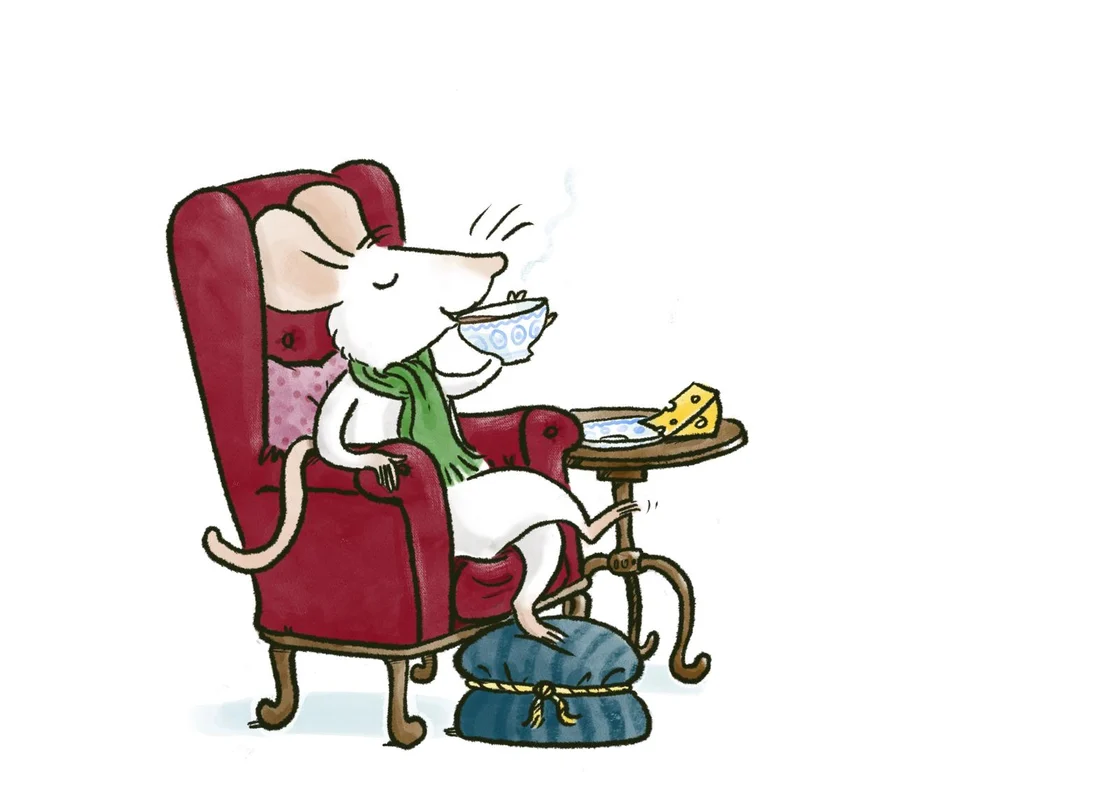
We’re predominantly powered by tea. In fact, one of the questions we ask when interviewing prospective members of staff is: “Do you drink tea?”
Technically, I’m not entirely sure this is an essential requirement of the role. In practice, however, it probably is. There is an awful lot of tea drunk in our shop.
I may be powered by cheese, but I’m fairly sure I run on tea.
And apparently, this isn’t just a Cheese Etc thing. It’s genetic. My nephew once asked my brother, “Why do we always have to have a cup of tea first? My brother’s answer was beautifully simple. “We’re Grimstones.” And really, there was nothing more to say.
Going out? Cup of tea first.
Got a job to do? Cup of tea first.
Need to make an important decision? Definitely cup of tea first.
Just had a cup of tea? Well, depending on how long ago it was, perhaps we should put the kettle on.
It’s less a beverage and more an operating system.
The wonderful thing about those millions of tonnes of cheese is that they represent something both enormous and incredibly personal.
Cheese is simultaneously a global commodity and an intensely local food. You can buy mass-produced Mozzarella almost anywhere in the world, while somewhere else a cheesemaker may be producing a cheese that barely travels beyond the nearest village. And that’s what makes my job so interesting.
Every cheese on our counter has a story. A cheesemaker, a place, a tradition, an idea or sometimes a happy accident. It’s why, after all these years, I still find something new to learn about cheese almost every day. And why I still love talking about it.
So the next time someone questions whether you really need quite so much cheese, just tell them that the world produces more of it than coffee, tea and cocoa combined.
Humanity has clearly made its decision.
Now, if you’ll excuse me, I think it’s time to put the kettle on.