
I’ve been reflecting a lot recently about American cheeses – mostly because I was sent a piece of cheese, but more about that later…
America didn’t invent cheese. Obviously. But it did reinvent what cheese could become.
By the time Europeans arrived in North America, humans had already been making cheese for thousands of years. Europe had established regional cheesemaking traditions, recipes had been passed between generations and many of the cheeses we still recognise today already had long histories behind them.
But America did something rather interesting with cheese. It reinvented what cheese could become. And if your immediate thought when I say American cheese is a square, orange slice individually wrapped in plastic, bear with me. Because the story is considerably more interesting than that.
Cheese Arrives With The People
Cheesemaking knowledge travelled to America with European settlers and immigrants. They didn’t arrive with a single tradition. They brought many of them. English settlers brought their knowledge of cheeses such as Cheddar. Dutch immigrants brought their own cheesemaking traditions. Later waves of Swiss, German, Italian and other European immigrants brought theirs.
But you can’t simply pick up a cheese, move it several thousand miles and expect it to remain exactly the same. The cows are different. The grass is different. The climate is different. The equipment changes. The available cultures change. And perhaps most importantly, the people eating the cheese are different too.
So the cheeses began to change. And gradually, something distinctly American started to emerge.
Then America Did What America Does
It made things bigger. For centuries, cheese had largely been made on farms. Milk was perishable and turning it into cheese was a rather clever way of preserving its nutritional value for considerably longer.
But during the nineteenth century, America began changing the scale on which cheese could be produced. The development of cheese factories allowed milk from multiple farms to be pooled and cheese to be made more consistently and in much larger quantities. Cheese was no longer simply something made from the milk produced by your own cows. It could become an industry. And that changed everything.
Standardisation meant consumers could buy a cheese and have a reasonable idea what it would taste like. Mechanisation made production more efficient. Railways allowed cheese to travel further. Refrigeration eventually transformed how it could be stored and transported. Cheese had entered the modern world.
And Then There’s “American Cheese”
We need to talk about the orange stuff. Because processed American cheese is part of this story too. It is very easy for cheese people to be sniffy about processed cheese. I know. I’m a cheesemonger. Put a beautiful clothbound Cheddar in front of me and I’m hardly going to reach past it for a plastic-wrapped slice. But processed cheese solved a problem.
Natural cheese changes. It ripens. It dries. Fat can separate when it is heated. Different batches behave differently. The development of processed cheese created something consistent, stable, easily transported and, importantly, very good at melting.
Was it the pinnacle of cheesemaking? No. Was it clever? Actually, yes. And America embraced it with enormous enthusiasm.
Unfortunately, somewhere along the way, American cheese became synonymous with processed cheese – particularly outside America. Which is rather unfair. Because something else was happening.
The Europeans Had Rules. America Had Freedom.
This is where American cheese becomes really interesting. In much of Europe, cheese is intrinsically connected to place and tradition. Protected cheeses can have extraordinarily detailed rules governing where they may be made, which milk can be used and how they must be produced. Parmigiano Reggiano has to be made in a defined area of Italy according to specific rules. Roquefort must come from Roquefort-sur-Soulzon. West Country Farmhouse Cheddar PDO must be made in the West Country.
These protections preserve something incredibly valuable: the connection between a cheese, its history and its landscape. But American cheesemakers weren’t bound by centuries of those same traditions. They could experiment.
Sometimes the results weren’t terribly exciting. Sometimes they were extraordinary.
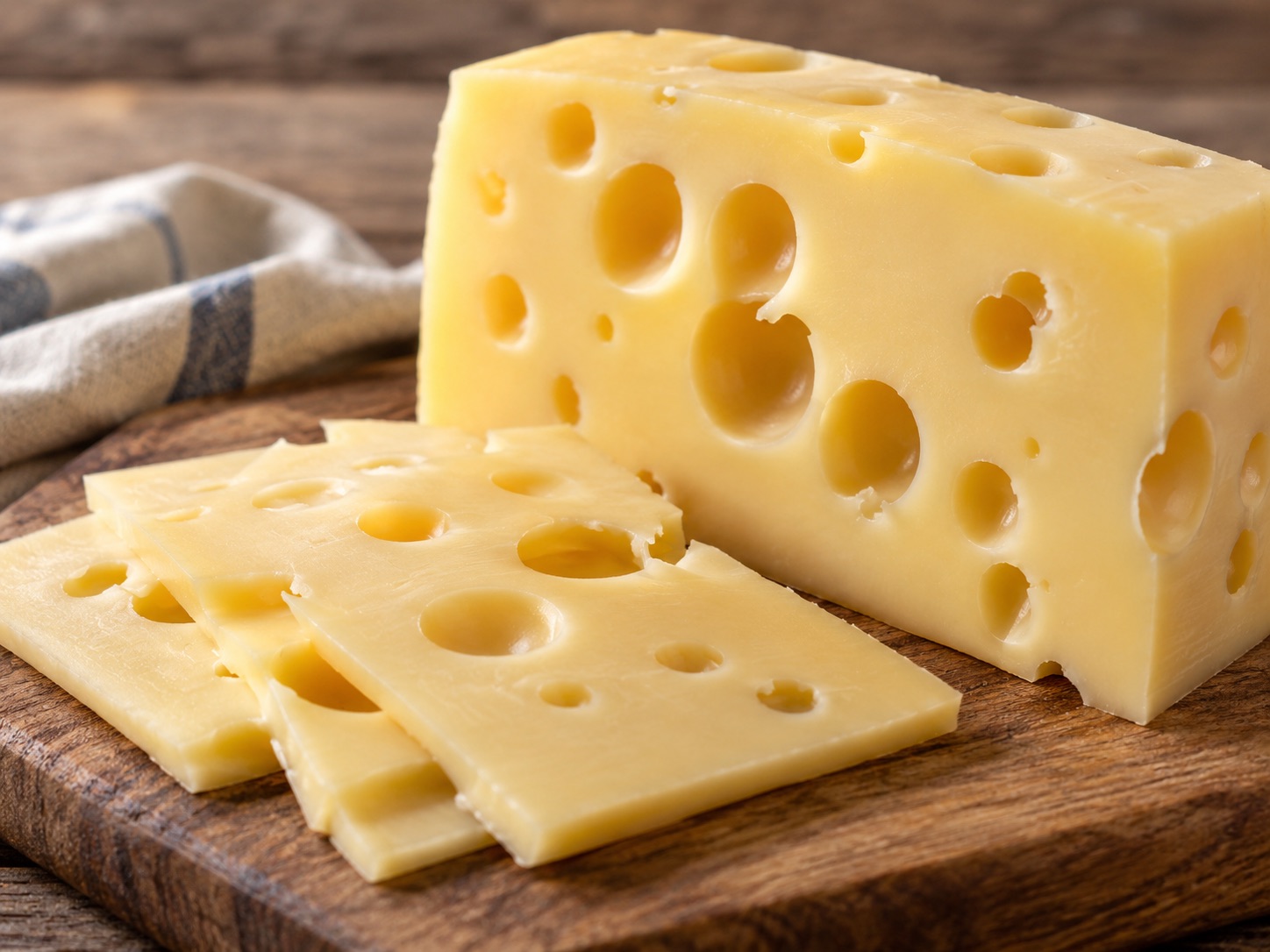
Swiss – But Not Swiss
Perhaps one of the best examples of America adapting European cheese is Swiss cheese. Ask for Swiss cheese in America and you are unlikely to be handed a piece of Gruyère or Emmentaler. Instead, Swiss has become a style of its own: mild, slightly sweet and nutty, pale in colour and, most importantly, full of holes. (Or eyes, if we’re being properly cheesy about it.)
Its origins lie with Swiss cheesemakers who brought their skills and traditions to America, particularly to Wisconsin and other dairy-producing states. But what developed wasn’t simply a replica of a cheese being made back home. It became American Swiss. The holes got bigger, the flavour generally became milder and the cheese became familiar to generations of Americans in sandwiches, delis and cheeseburgers. And that’s what makes it so interesting.
In Switzerland, there isn’t actually one cheese called Swiss cheese. There’s Gruyère, Emmentaler, Appenzeller and many others, each with their own identities, histories and methods of production. America took one recognisable characteristic (particularly those famous holes associated with Emmentaler-style cheeses) and eventually turned Swiss into a category in its own right.
Is American Swiss the same thing as Emmentaler? Absolutely not. But perhaps that’s the point. It isn’t simply a failed attempt to reproduce a Swiss cheese. It’s an example of an imported cheesemaking tradition gradually becoming something distinctly American.
Then American Cheese Went Back To The Farm
Perhaps the most interesting part of the story is what happened next. Having helped turn cheese into an industrial product, America rediscovered artisan cheese.
From the late twentieth century onwards, a new generation of cheesemakers began looking again at small-scale production, traditional techniques, raw milk, farmstead cheesemaking and the relationship between milk and place. But they weren’t simply recreating Europe. They were using European knowledge as a starting point and making cheeses that reflected where they were.
Today, the American artisan cheese scene produces some genuinely exceptional cheese. And I think we sometimes struggle with that in Europe. We have spent so long associating good cheese with tradition that we can forget that every traditional cheese was new once. Someone made the first Cheddar. Someone made the first Stilton. Someone looked at milk and mould and thought, “let’s see what happens”. Tradition has to start somewhere.
So What Is American Cheese?
That’s actually quite difficult to answer.
Which perhaps makes American cheese rather more interesting than its reputation suggests. America didn’t invent cheese. It inherited thousands of years of knowledge from the cheesemaking cultures that came before it. Then it adapted it, mechanised it, industrialised it, commercialised it, occasionally did some fairly questionable things to it…and eventually started reinventing it all over again.
America didn’t invent cheese. But it did reinvent what cheese could become.
And actually, I think that’s a cheese story worth telling.
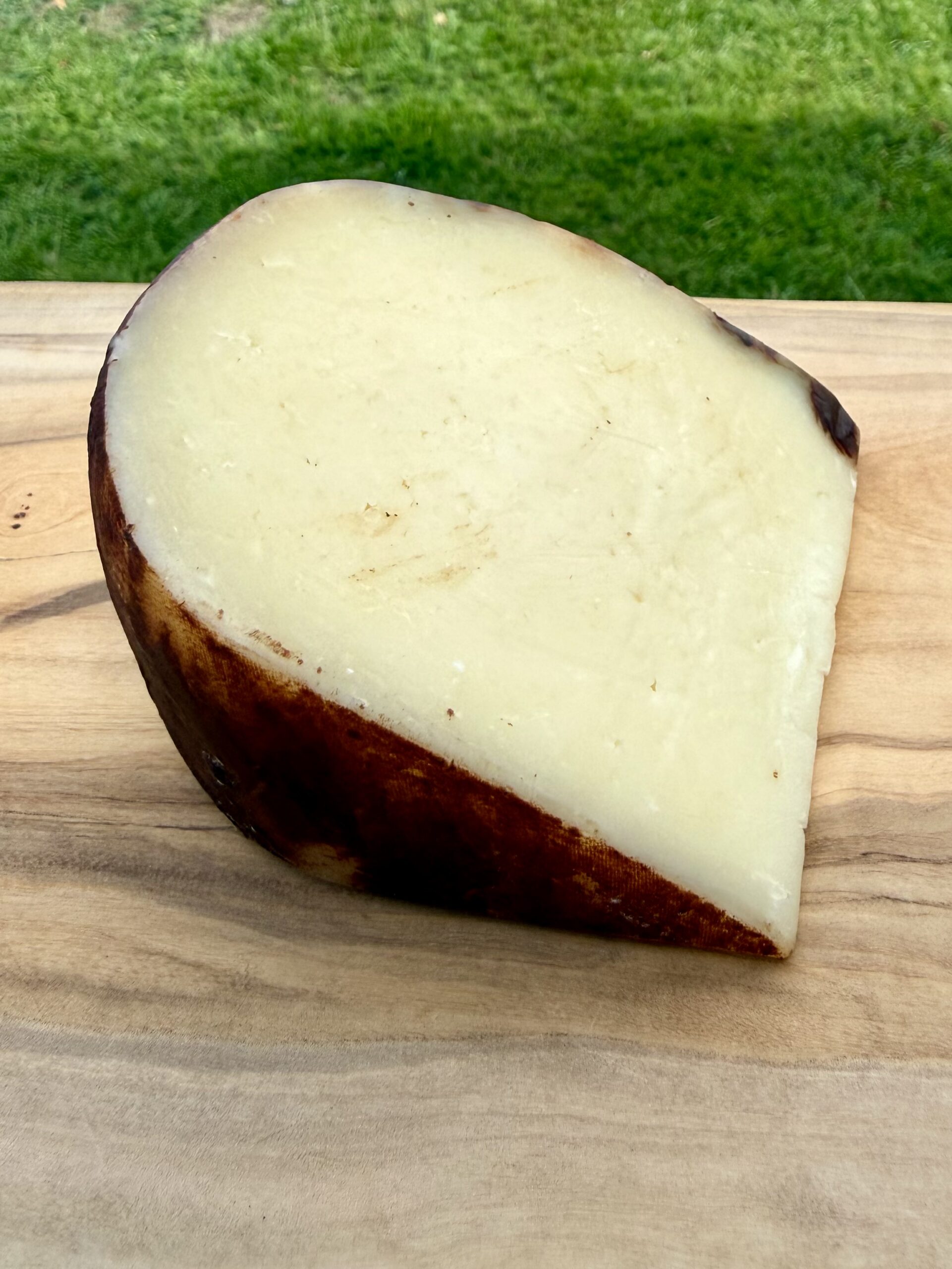
Dry Jack is one of those cheeses that makes the story of American cheese considerably more interesting. Jack cheese developed in California, but Dry Jack took it in a different direction: aged until firm, concentrated and grating-cheese hard, it became something unmistakably American rather than simply an imitation of something European.
The Vella Cheese Company in Sonoma made cheese for generations, and its Dry Jack became something of an American classic. Sadly, the company has now closed, which means the piece sitting in front of me may be from one of the last batches ever made.
Which makes tasting it feel rather special. And what a cheese.
It’s sweet and nutty, with prominent flavours of toasted caramel and roasted nuts, followed by a subtle mushroomy earthiness. There’s a buttery depth underneath it all, before a savoury, salty finish that reminds me slightly of Parmigiano. Its texture is firm and dense, as you’d expect from an aged cheese, but surprisingly smooth – almost melting in the mouth.
And perhaps that’s the perfect place to finish this story.
Here is a cheese born from European cheesemaking knowledge, but shaped by California, by American cheesemakers and by its own history. It isn’t Parmesan. It isn’t an aged Cheddar. It isn’t trying to be either.
It’s Dry Jack.
And I’m very glad I got to taste it before it disappeared.