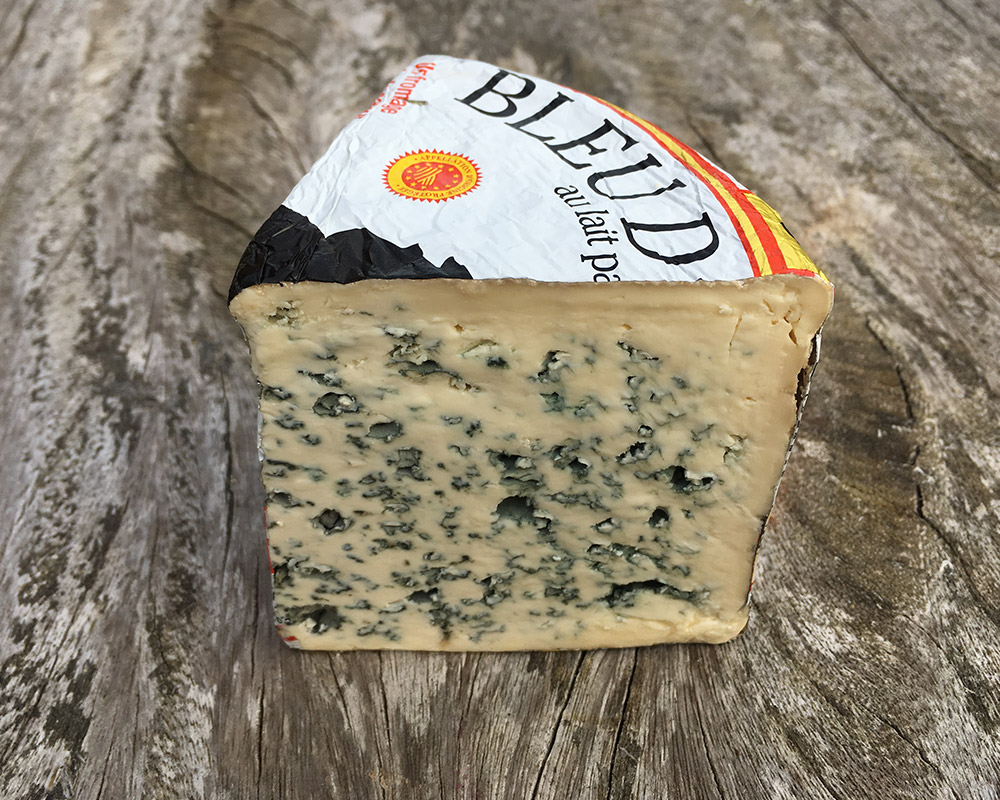
Description
Bleu d’Auvergne PDO Cheese
About Bleu d’Auvergne PDO
Bleu d’Auvergne always brings to mind misty French hillsides and those striking blue veins winding through creamy cow’s milk cheese. It’s a proper classic; bold, creamy, and full of character, with a story that goes right to the heart of French tradition.
Bleu d’Auvergne comes from the volcanic Massif Central region, where cows munch away on lush, high-up pastures. In the 1850s, a local farmer named Antoine Roussel had a bit of a lightbulb moment, he added blue mould to his cheese and poked it with needles to let the mould work its magic. The result? A blue cheese with gorgeous veins and a flavour that soon had everyone hooked.
Generations of local cheesemakers have kept the tradition going, passing down their know-how from one to the next. By the 20th century, Bleu d’Auvergne had grown far beyond its farmyard roots and become a true symbol of the region.
Protected by PDO Tradition
These days, Bleu d’Auvergne is well protected. It got its official French AOC status back in 1975, which means it has to be made the traditional way, right where it started. Then in 1996, it picked up the European AOP label as well, so you can be sure you’re getting the real deal.
This protected status means only cheese made in certain parts of Auvergne, following all the old rules, can be called Bleu d’Auvergne. Everything is covered, from where the cows graze to how the cheese is aged. It’s all about keeping that special link to the land and the old ways.
Bleu d’Auvergne PDO – Jen’s Tasting Notes
Bleu d’Auvergne is strong and creamy at the same time. Inside, it’s ivory or pale cream, shot through with blue-green veins from the same mould you find in other famous blue cheeses. The rind is soft and a bit flowery, giving you a hint of what’s to come.
Taste-wise, Bleu d’Auvergne is bold but never too much. It’s salty, earthy, a bit mushroomy, and sometimes there’s a grassy note that takes you straight to the pastures. It’s creamy and melts beautifully if you leave it out, but still keeps its shape. The smell and taste always remind me of a walk in the woods after rain, a blue cheese tang with a good hit of rich dairy cream.
How to Serve and Pair Bleu d’Auvergne
- Make sure you take it out of the fridge a good hour before you want to eat it so it can come up to room temperature.
- Classic pairings: Sweet wines like Sauternes or late-harvest whites provide a luscious contrast to the cheese’s salty blue notes.
- Something a little different: For something a bit more unusual, a fruity rosé or even a slightly sweet amber ale can balance the intensity.
- On the plate: Fruit is always a winner: pears, apples, figs, or even a bit of watermelon if you’re feeling adventurous. It really lifts the richness of the cheese. But if you’re after something savoury, try it with toasted nuts, a drizzle of honey, or even a splash of balsamic.
- In the kitchen: Try melting it into a sauce for steak, stirring it through pasta, or crumbling it over roasted veg, it’s delicious however you use it.
Jen’s note: Many blue cheeses have mysterious beginnings, but Bleu d’Auvergne is a bit different. It’s one of the few with a known inventor: Antoine Roussel, a farmer who also knew a thing or two about pharmacy. His curiosity, plus a bit of local know-how, gave us the cheese we know today. It’s a lovely mix of science and tradition, and the story is surprisingly well documented for something from the 1800s.
Buying Bleu d’Auvergne PDO
- Brand or Producer: Fromagerie St Flour
- Product name: Bleu d’Auvergne PDO
- Milk: Cow
- Country: France
- Region: Auvergne
- Strength: Medium to strong
- Vegetarian: No
- Suitable for pregnancy: No
- Allergens: MILK
Sizes and Prices
- 100g wedge, £2.55
- 500g wedge, £12.75
- 1/2 Wheel (approx. 1.2kg), available to pre-order
Storage Advice
- Keep refrigerated
- Wrap in waxed paper or cling film
- Remove from the fridge before serving
- Consume within 10 to 14 days of opening
Delivery and Collection
- UK wide courier delivery
- Click and collect from our Pangbourne shop
- Free local delivery available for selected postcodes
Ingredients (Allergens are listed in capitals)
MILK, starter cultures, rennet, salt, mould cultures