Description
Camembert de Normandie PDO Cheese
About Camembert de Normandie PDO
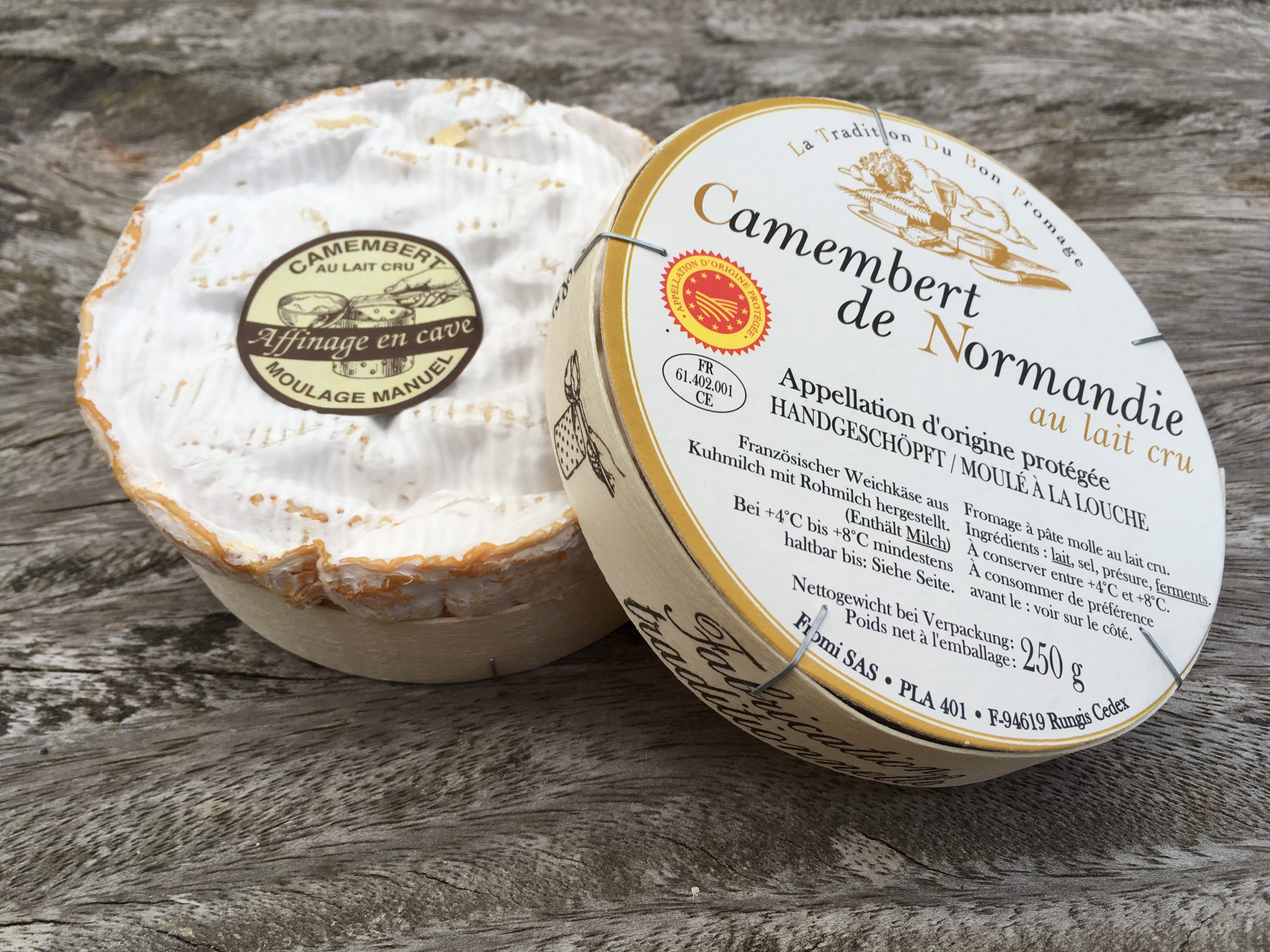
Camembert de Normandie is one of those cheeses that always feels a bit special to me. It’s soft and creamy inside, with that lovely white rind and a gentle mushroomy aroma. There’s a real sense of place to it, too; it comes from northern France and has a long, proud history. The Protected Designation of Origin (PDO) means it’s still made the traditional way, in the region that gives it so much character.
The History
The story of Camembert goes back to the late 1700s in Normandy, a part of France famous for its green fields and brilliant dairy herds. The tale goes that in 1791, a young lady called Marie Harel made the very first Camembert in the village that bears her name. Apparently, she learned the way of making a soft, rind-covered cheese from a travelling priest from Brie, a lovely bit of cheese folklore if ever there was one.
Marie Harel put her new cheesemaking skills to good use, working with the rich milk from Normandy’s famous cows. The result was a soft, creamy cheese with that distinctive white rind. It didn’t take long for word to spread, first through local markets and then all the way to Paris, as trains and roads made it easier to bring country treats to the city.
By the early 1900s, Camembert was everywhere in France, in books, on stamps, and as part of soldiers’ rations. With fame came imitators, many of whom ignored traditional Normandy methods. To keep Camembert anchored in tradition, local producers sought official recognition. In 1983, Camembert de Normandie earned PDO status, securing the name for cheese made in the proper place and manner, a win for tradition and true cheese lovers.
Protected By Its PDO Status
Protected Designation of Origin (PDO), or Appellation d’Origine Protégée (AOP) in French, ranks among Europe’s strongest food labels. For Camembert de Normandie, the PDO status applies strict authenticity rules. Only cheese produced within the specified Normandy regions (Orne, Calvados, Manche, and parts of Eure and Seine-Maritime) qualifies. These lush grasslands yield rich milk, essential to a distinct flavour. PDO rules require raw or thermised cow’s milk from cows grazed locally, using at least two milkings. Traditional starter cultures and animal or microbial rennet are required, with curds gently ladled into moulds, slowly drained, and salted by hand.
These steps preserve seasonal variety and traditional techniques. Camembert must age for at least 3 weeks as its bloomy rind develops due to Penicillium camemberti.
Only cheeses that meet all criteria can legally be called Camembert de Normandie in the EU, guaranteeing authenticity and protection against imitation. The PDO safeguards maintain Camembert de Normandie as a true product of its place and tradition, not a generic cheese style.
Camembert de Normandie – Jen’s Tasting Notes
Camembert de Normandie delivers a rich, deep sensory experience with each mouthful. Its thin, velvety rind often wrinkles with age. The pale ivory interior softens outward as it matures, giving a creamy, smooth texture. Its aroma is rich with fresh dairy, floral, and earthy notes. Older cheeses reveal hints of mushroom and hay. Texture starts soft near the rind and becomes flowing at peak, yet remains cohesive; young wheels may feel firm, even slightly chalky.
Its flavour starts with mild buttery sweetness, then moves to earthy, nutty complexity, mushroom and autumn grass appear mid-palate. The finish is balanced, savoury, and rich but not too sharp. Unlike mass-market Brie or global Camembert-style cheeses, authentic Camembert de Normandie offers greater nuance and a clear sense of place.
How to Serve and Pair Camembert de Normandie
- Make sure you take it out of the fridge a good hour before you want to eat it so it can come up to room temperature.
- Classic pairings: To enjoy Camembert as in Normandy, have it with local cider, dry or demi-sec, both bring out the orchard notes of the cheese.
- Something a little different: Pairing Camembert with White Burgundy works well. The wine’s richness harmonises with the cheese’s creamy texture.
- On the plate: While many enjoy baking Camembert de Normandie, you can also serve it simply on a cheeseboard with a rustic baguette and sliced apples. This style accentuates the cheese’s authentic flavours, complementing its luscious texture and earthy notes.
- In the kitchen: Baked whole with herbs, or melted into quiche or gratin, Camembert offers extra indulgence.
Jen’s note: During World War I, Camembert, along with baguette and wine, became a symbol of French resilience. Even during shortages, it appeared in soldiers’ parcels. Its round shape and white rind came to represent home for soldiers far from Normandy.
Buying Camembert de Normandie
- Brand or Producer: Fromagerie Gillot
- Product name: Camembert de Normandie PDO
- Milk: Cow
- Country: France
- Region: Normandy
- Strength: Medium
- Vegetarian: No
- Suitable for pregnancy: No
- Allergens: MILK
Sizes and Prices
- Whole little cheese (approx. 250g), £10.00
Storage Advice
- Keep refrigerated
- Wrap in waxed paper or cling film
- Remove from the fridge before serving
- Consume within 10 to 14 days of opening
Delivery and Collection
- UK wide courier delivery
- Click and collect from our Pangbourne shop
- Free local delivery available for selected postcodes
Ingredients (Allergens are listed in capitals)
MILK, salt, rennet, ferments