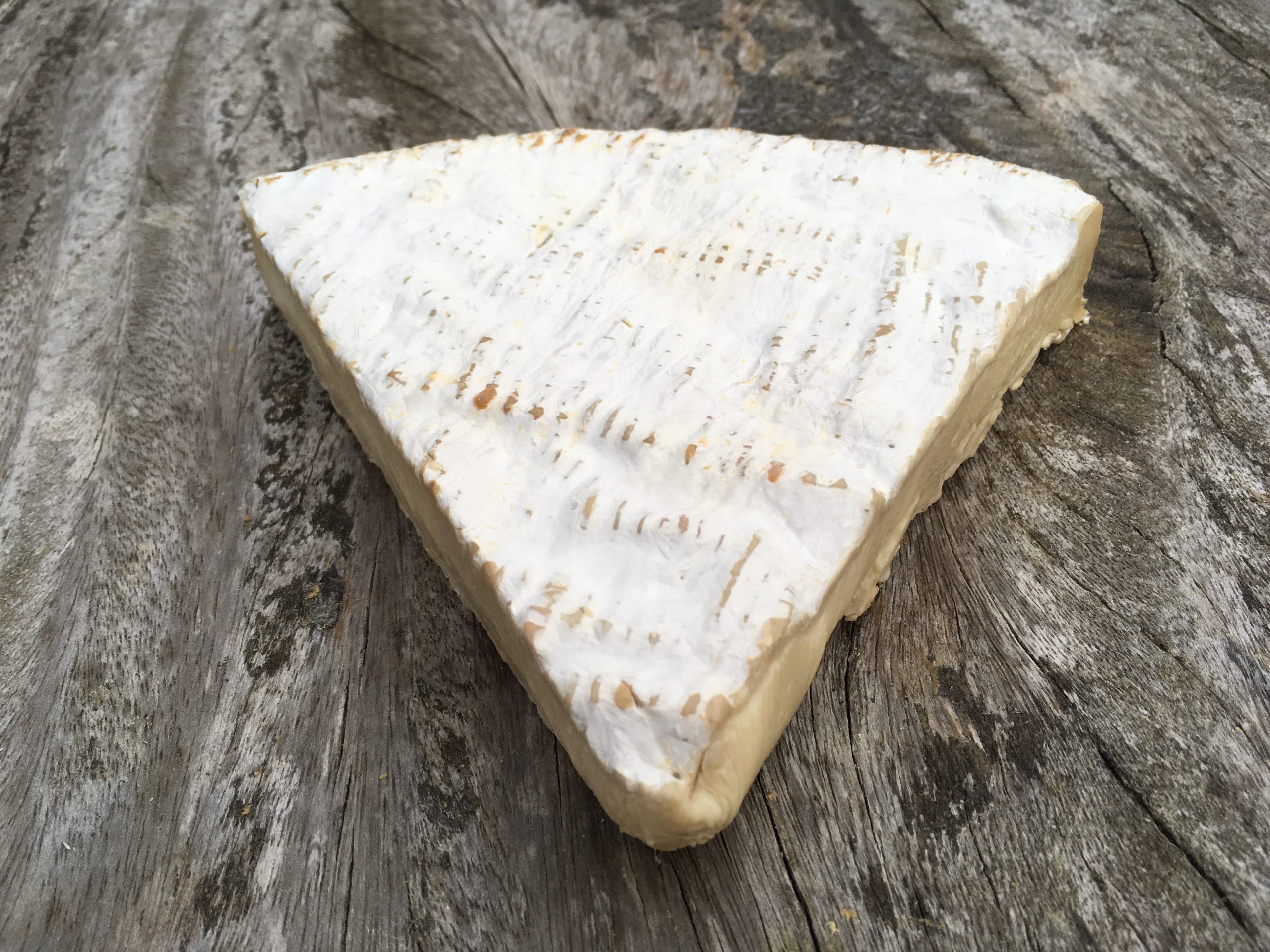
Description
Brie de Meaux PDO Cheese
About Brie de Meaux PDO
Brie de Meaux PDO is one of the great cheeses of France. It’s big, beautiful, made with raw cow’s milk and, when perfectly ripe, wonderfully soft and creamy.
It comes from the Brie region to the east of Paris and takes its name from the town of Meaux. Cheese has been made in this part of France for centuries, and Brie de Meaux has built quite the reputation along the way.
In fact, if you read about Baron Bigod, this is where you’ll see the family resemblance. Brie de Meaux was one of the great French cheeses that inspired Jonny Crickmore when he set out to create his own large, bloomy-rinded cheese in Suffolk.
But Brie de Meaux is very much a cheese of its own place, with centuries of history behind every enormous wheel.
Protected By Its PDO Status
Brie de Meaux has been protected since 1980, originally with French AOC status and now as a PDO (Protected Designation of Origin).
That protection sets out where and how the cheese can be made. Most importantly, genuine Brie de Meaux PDO must be made from raw cow’s milk.
The curds are gently ladled into wide, shallow moulds using a traditional perforated ladle known as a pelle à Brie. The cheeses drain naturally before being salted and left to develop their characteristic white bloomy rind.
And they really are big cheeses. A whole Brie de Meaux weighs around 2.5–3kg and measures roughly 36–37cm across.
There’s something rather magnificent about seeing a whole one on the counter.
The King of Cheeses
Brie has been enjoyed by French royalty and aristocracy for centuries, but perhaps the most famous chapter in its story came at the Congress of Vienna in 1815.
According to the story, representatives from across Europe began arguing about which of their countries produced the finest cheese. Naturally, the only sensible way to settle such an important diplomatic matter was with a cheese competition.
Brie de Meaux emerged victorious and was declared the “King of Cheeses.”
Whether it was quite as formal a competition as the story has become over the years is another matter, but the title stuck — and more than two centuries later, you’ll still hear Brie de Meaux described that way.
Brie de Meaux PDO – Jen’s Tasting Notes
If your idea of Brie comes from the mild little wedges you find in supermarkets, Brie de Meaux is a completely different experience.
When young, the centre can be fairly firm and chalky, with a fresher, lactic flavour. As it ripens, the cheese softens from the rind towards the middle and becomes increasingly rich and silky.
At its best, you’ll find flavours of cultured cream, butter, mushrooms and hazelnuts, alongside more earthy, savoury notes as the cheese matures.
And eat the rind! The bloomy white exterior is very much part of the experience and brings another layer of mushroomy, earthy flavour.
A perfectly ripe Brie de Meaux is one of those cheeses that reminds me why the classics became classics in the first place.
How to Serve and Pair Brie de Meaux PDO
- Make sure you take it out of the fridge a good hour before you want to eat it. Serving Brie de Meaux fridge-cold would be a terrible waste of all that lovely flavour and texture.
- Classic pairings: Champagne and Brie de Meaux is a classic for good reason. The acidity and bubbles are brilliant against the richness of the cheese.
- Something a little different: If you prefer red, keep it light. Beaujolais works beautifully without overwhelming the more delicate flavours.
- On the plate: A fresh baguette. That’s it. Sometimes the French really do know best.
- In the kitchen: You can cook with Brie de Meaux, but I’m going to say exactly what I said about Baron Bigod — I wouldn’t waste it! Give me a ripe piece, some bread and a glass of something nice instead.
Jen’s note: Brie de Meaux was famously crowned the “King of Cheeses” at the Congress of Vienna in 1815. Personally, I think declaring a cheese the winner is a much better way of settling international disputes.
Buying Brie de Meaux PDO
- Brand or Producer: Fromagerie Dongé
- Product name: Brie de Meaux PDO
- Milk: Cow
- Country: France
- Region: Meaux
- Strength: Medium
- Vegetarian: No
- Suitable for pregnancy: No
- Allergens: MILK
Sizes and Prices
- 100g wedge, £3.15
- 500g wedge, £15.75
- Whole wheel (approx. 3kg), available to pre-order
Storage Advice
- Keep refrigerated
- Wrap in waxed paper or cling film
- Remove from the fridge before serving
- Consume within 10 to 14 days of opening
Delivery and Collection
- UK wide courier delivery
- Click and collect from our Pangbourne shop
- Free local delivery available for selected postcodes
Ingredients (Allergens are listed in capitals)
MILK, salt, starters, rennet, mould cultures