Description
Dolcelatte Cheese
About Dolcelatte
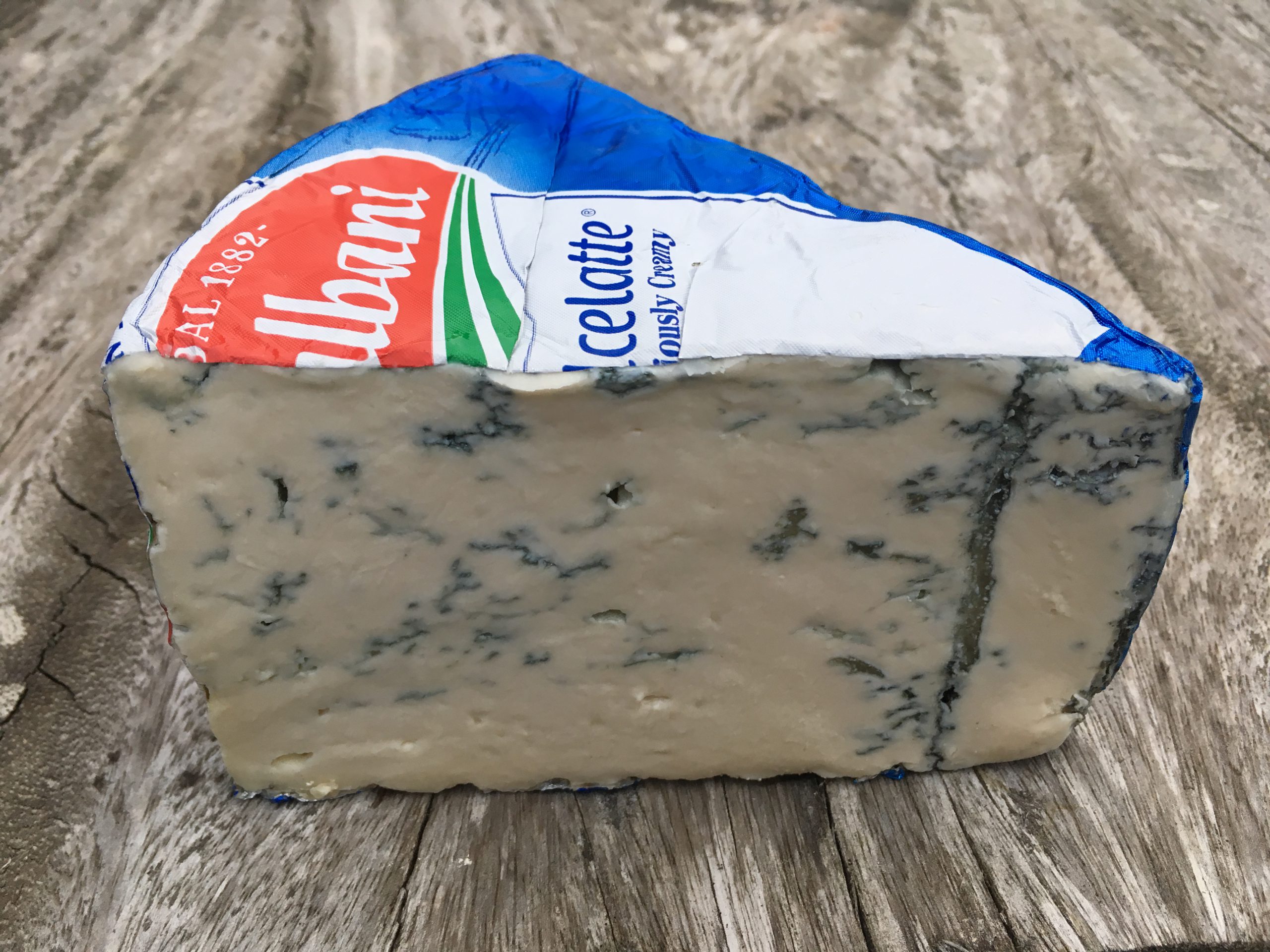
Dolcelatte is a bit different from many of the cheeses on our counter because it wasn’t created hundreds of years ago on an Italian farm. It was actually developed by Galbani as a gentler, creamier blue cheese — particularly with the British market in mind.
Made in Lombardy in northern Italy, the home of Gorgonzola PDO, Dolcelatte takes its inspiration from Italy’s great blue-cheese tradition but deliberately takes things in a softer direction. Its name translates rather appropriately as ‘sweet milk’, which gives you a pretty good clue as to what to expect.
This is a blue for people who like things creamy rather than punchy. Soft, buttery and almost spreadable when perfectly ripe, there’s enough blue veining to give it a gentle tang and spice, but the sweet creaminess of the cheese always remains the star of the show.
Made for the British
I love the fact that Dolcelatte was developed specifically as a milder blue cheese for export, with Britain becoming a particularly important market.
Galbani already had generations of Italian cheesemaking experience behind them, but rather than simply expecting everyone to embrace a stronger traditional blue, they created something deliberately softer, sweeter and more approachable.
And clearly they knew us rather well, because Dolcelatte has become a familiar sight on British cheese counters.
It also shows that not every cheese tradition has to be ancient. Sometimes a cheese can be deliberately created for a particular audience and become a classic in its own right.
Sweet Milk by Name…
Dolcelatte is made from pasteurised cow’s milk and blue mould cultures are added during the make. As the cheese matures it is pierced, allowing oxygen into the paste and encouraging those characteristic blue-green veins to develop.
But unlike a firmer, more powerful blue, Dolcelatte is all about retaining moisture and creaminess. The paste remains wonderfully soft and, once properly ripe and up to room temperature, can become almost spoonable.
The blue is important, of course, but it isn’t supposed to dominate. Think sweet cream and butter first, then gentle saltiness, tang and blue spice afterwards.
Dolcelatte – Jen’s Tasting Notes
Dolcelatte is one of those cheeses that does exactly what its name suggests. It’s sweet, milky and incredibly creamy, with just enough blue to stop all that richness becoming too much.
The texture is probably my favourite thing about it. When properly ripe, it becomes wonderfully soft and almost spreadable — the sort of cheese that seems to melt away as you eat it.
Flavour-wise, I find lots of fresh cream and butter, followed by a gentle tang from the blue veins. There’s a little mushroomy earthiness, some saltiness and perhaps a touch of nuttiness, but nothing comes crashing in.
If you’re nervous about blue cheese, this is a very good place to start. And if you’re already a committed blue-cheese eater, sometimes it’s rather nice to have one that doesn’t try to pick a fight with you.
How to Serve and Pair Dolcelatte
- Make sure you take it out of the fridge a good hour before you want to eat it so it can come up to room temperature.
- Classic pairings: Keep things Italian with Moscato d’Asti. Its gentle sweetness and fresh fruit are brilliant with the creamy cheese and salty blue.
- Something a little different: Try a malty brown ale. Those caramel and toasted flavours work surprisingly well with Dolcelatte’s sweet, buttery character.
- On the plate: Fresh pear or figs are perfect, perhaps with some toasted walnuts and a little drizzle of honey. With a cheese this creamy, you don’t need to complicate things too much.
- In the kitchen: Dolcelatte melts beautifully, so stir it through risotto or pasta, crumble it over pizza or melt it into mashed potato. It’s also fabulous simply spread onto warm bread — which barely counts as cooking, but I’m perfectly happy with that.
Jen’s note: I find it rather amusing that Dolcelatte was created by an Italian cheesemaker partly with us Brits in mind. Apparently we wanted our blue cheese a little sweeter and creamier — and judging by how popular Dolcelatte became, they weren’t wrong!
Buying Dolcelatte
- Brand or Producer: Galbani
- Product name: Dolcelate
- Milk: Cow
- Country: Italy
- Region: Lombardy
- Strength: Mild
- Vegetarian: No
- Suitable for pregnancy: No
- Allergens: MILK
Sizes and Prices
- 100g wedge, £3.30
- 500g wedge, £16.50
Storage Advice
- Keep refrigerated
- Wrap in waxed paper or cling film
- Remove from the fridge before serving
- Consume within 10 to 14 days of opening
Delivery and Collection
- UK wide courier delivery
- Click and collect from our Pangbourne shop
- Free local delivery available for selected postcodes
Ingredients (Allergens are listed in capitals)
MILK, salt, starter cultures, rennet, Penicillium Roqueforti