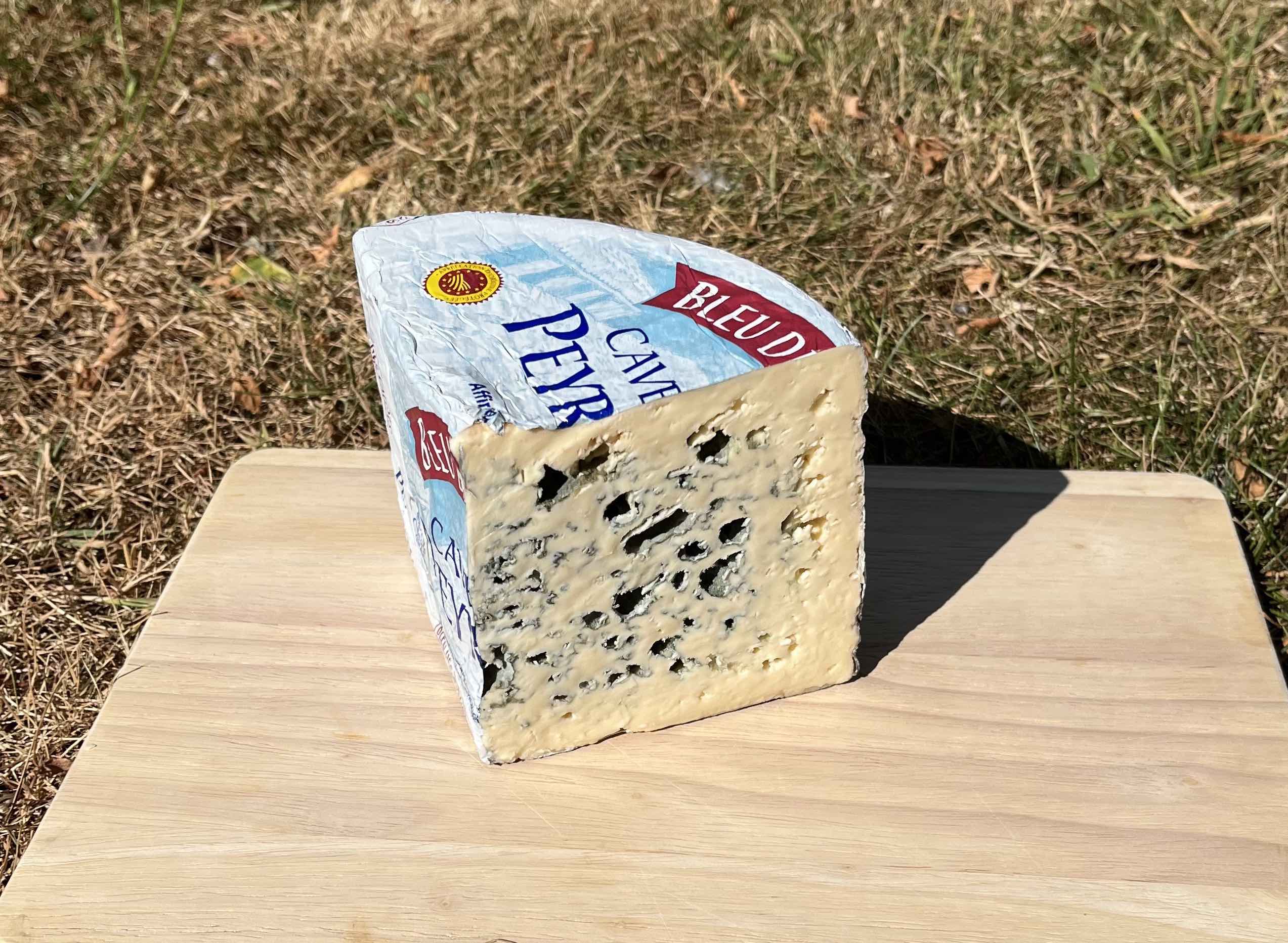
Description
Bleu des Causses PDO Cheese
About Bleu des Causses PDO
If cheeses had personalities, Bleu des Causses would be the quietly charming cousin of Roquefort PDO, a little mysterious, a bit wise, and always with something interesting to say. It’s a blue cheese with a gentle, rustic character that really lets you taste the story of its origins in every creamy mouthful.
Bleu des Causses comes from the limestone plateaus of southern France, mostly in the Grands Causses region of Occitanie. It’s a place of deep gorges and wide, grassy hills. These same plateaus are where Roquefort PDO is made, but Bleu des Causses has taken its own path among French blue cheeses.
There’s a story that shepherds here, many years ago, found out that cow’s milk could be turned into blue cheese, thanks to the local cave moulds. Roquefort PDO has always been made with sheep’s milk, but in the Causses, farmers began making a blue cheese from cow’s milk that really shows off the mineral-rich grass, the damp cave air, and the long tradition of cheese-making in the region.
By the time France started putting official protections in place in the mid-1900s, Bleu des Causses had already found its own special character.
Protected by PDO Tradition
Bleu des Causses is protected by the Appellation d’Origine Protégée (AOP), which is the European version of France’s AOC system. This isn’t just a fancy label; it means you’re getting the real thing.
To call it Bleu des Causses, producers have to stick to some pretty strict rules. The cheese has to be made in certain parts of the Grands Causses, on those rugged limestone plateaus like Causse du Larzac and Causse de Sauvete. Only cow’s milk from local herds that graze on the region’s grasses and herbs is allowed.
The cheesemakers must also use traditional methods during the make. The cheese is then aged in the region’s naturally humid caves or cellars, where the local moulds (especially Penicillium Roqueforti) work their magic and create those lovely blue veins.
All these rules mean that every wedge of Bleu des Causses really does taste of its home region.
Bleu des Causses PDO – Jen’s Tasting Notes
When you cut into Bleu des Causses, you’ll see a creamy, pale centre with gentle blue veins. The blue isn’t as dramatic as in some other cheeses, but it’s still lovely to look at. Its texture is soft, supple, and extra creamy, especially if you let it come up to room temperature. The aroma is earthy and fresh, with hints of damp limestone caves and fresh grass.
And then there’s the flavour! There’s a nice balance of mellow and tangy, with a gentle saltiness, a hint of mushroom, and just enough blue bite to keep things interesting without becoming too much. It’s not as strong as something like gorgonzola piccante, Bleu des Causses is much more easy-going. I often pick up hints of buttercup and sweet hay; they serve as a gentle reminder of the pastures where the cows spend their days.
How to Serve and Pair Bleu des Causses
- Make sure you take it out of the fridge a good hour before you want to eat it so it can come up to room temperature.
- Classic pairings: Sauternes is a classic; its honeyed sweetness is just the thing to balance out the cheese’s saltiness.
- Something a little different: A dry, zippy rosé is also a great match, especially when the sun’s out
- On the plate: Pears, apples, and grapes bring a juicy, crisp bite that pairs well with the cheese’s creamy flavour. Nuts like walnuts and hazelnuts add a lovely crunch and a bit of savouriness.
- In the kitchen: Crumble Bleu des Causses over rocket with apples, walnuts, and a simple vinaigrette for a lunch that is both refined and rustic.
Jen’s note: If you ever get the chance to visit the Causses, with their big skies, sheep-filled fields, and old caves, I’d say go for it. You’ll get to know this cheese even better, and you might just come home with a wedge or two that really tastes of the place.
Buying Bleu des Causses PDO
- Brand or Producer: Fromages et Terroir
- Product name: Bleu des Causses PDO
- Milk: Cow
- Country: France
- Region: Occitanie
- Strength: Strong
- Vegetarian: No
- Suitable for pregnancy: No
- Allergens: MILK
Sizes and Prices
- 100g wedge, £3.40
- 500g wedge, £17.00
- 1/2 Wheel (approx. 1.2kg), available to pre-order
Storage Advice
- Keep refrigerated
- Wrap in waxed paper or cling film
- Remove from the fridge before serving
- Consume within 10 to 14 days of opening
Delivery and Collection
- UK wide courier delivery
- Click and collect from our Pangbourne shop
- Free local delivery available for selected postcodes
Ingredients (Allergens are listed in capitals)
MILK, starter cultures, rennet, salt, Penicillium Roqueforti