Description
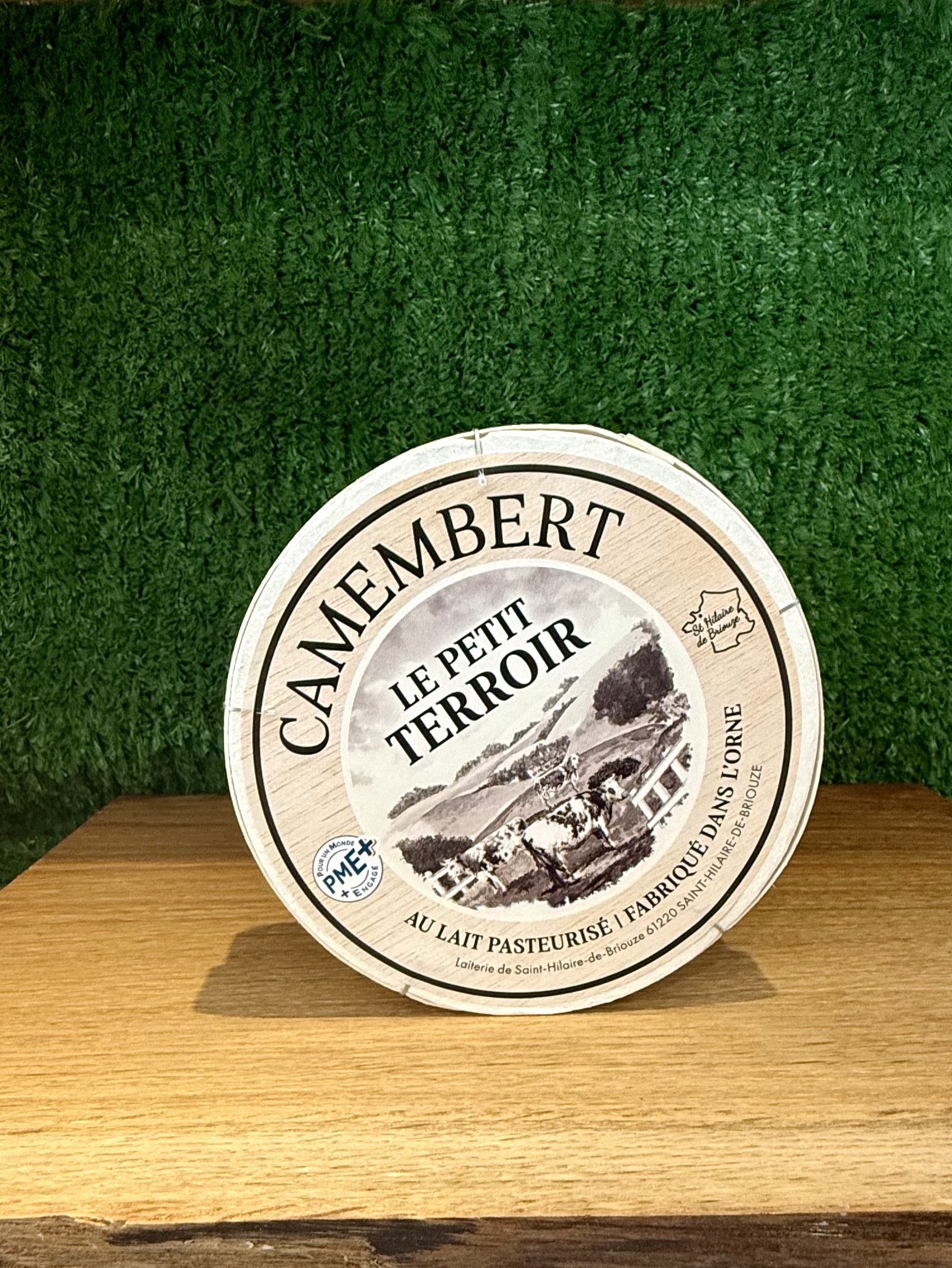
Camembert Le Petit Terroir Cheese
About Camembert Le Petit Terroir
Camembert Le Petit Terroir gives you a lovely taste of Normandy. Made with pasteurised cow’s milk, it has everything you want from a good Camembert — that snowy white rind, a softening creamy centre and gentle mushroomy flavours as it ripens.
Camembert is one of the most famous cheeses in the world, which means there are an awful lot of versions of it. Some are mild and fairly anonymous; others can become wonderfully ripe, earthy and full of character. Le Petit Terroir sits very comfortably in the middle. It’s approachable enough if you’re relatively new to Camembert but still has plenty of flavour as it matures.
And that last bit is important. Camembert isn’t a cheese that stays the same. Eat it young and it will be firmer, fresher and milder. Give it time and the texture softens, the flavours deepen and you end up with a completely different cheese.
A Little Camembert History
The story of Camembert is traditionally traced back to the late 18th century and Marie Harel, a farmer from Normandy who, according to legend, was taught a cheesemaking technique by a priest she sheltered during the French Revolution.
How much of that story is fact and how much is wonderful cheese folklore is open to debate, but there’s no doubt that Camembert became firmly associated with Normandy. Its fame spread across France and, during the First World War, it was included in soldiers’ rations, helping turn what had once been a regional cheese into a French icon.
There is an important distinction, though. Camembert de Normandie PDO is a protected cheese with strict rules governing where and how it is made. The word ‘Camembert’ on its own isn’t protected in the same way, which is why you’ll find cheeses bearing the name made in many different places and styles.
Le Petit Terroir is made in Normandy from pasteurised milk and gives us those familiar Camembert characteristics in a beautifully approachable cheese.
It’s All About Ripeness
With Camembert, when you eat it can be almost as important as which one you buy.
When young, Le Petit Terroir has a firmer centre and fresh, milky flavours. As it ripens, the cheese begins to soften from the rind towards the middle. The texture becomes increasingly creamy and the flavours move from fresh and lactic towards buttery, mushroomy and more savoury.
Some people love their Camembert with just a little firmness remaining in the centre; others want it soft and gooey all the way through. Neither is wrong — it’s simply a question of how you like your cheese.
Camembert Le Petit Terroir – Jen’s Tasting Notes
The first thing you’ll notice is that classic snowy-white bloomy rind. And yes, you can absolutely eat it! In fact, the rind is an important part of the flavour, bringing gentle earthy and mushroomy notes to the creamy cheese underneath.
When young, the paste is pale, fairly firm and fresh tasting, with lovely milky flavours and a gentle tang. Leave it to ripen and things start to get much more interesting. The paste softens from the outside in, becoming smooth and wonderfully creamy, while buttery, mushroomy and slightly nutty flavours begin to develop.
This isn’t one of those Camemberts that will frighten the neighbours when you open the fridge. It’s gentle, creamy and nicely balanced, which makes it a great introduction to the style — although I’d still give it plenty of time to ripen before eating it.
How to Serve and Pair Camembert Le Petit Terroir
- Make sure you take it out of the fridge a good hour before you want to eat it so it can come up to room temperature — particularly important with a soft cheese like this.
- Classic pairings: It has to be Normandy cider. A good dry cider has the freshness and fruit to cut through all that lovely creaminess.
- Something a little different: Try a light Pinot Noir. Its fruit and gentle earthy character work beautifully with a ripe Camembert without overpowering it.
- On the plate: A fresh baguette is really all you need. Tear off a piece, add some ripe Camembert and enjoy. Sometimes the simplest pairings really are the best.
- In the kitchen: Baked Camembert is a classic for a reason. Make a few small cuts in the top, add a little garlic and rosemary and bake until gloriously gooey. Just make sure your cheese comes in a suitable wooden box before putting the box anywhere near the oven!
Jen’s note: Don’t be frightened by the best-before date on a Camembert. If anything, I’m usually looking for one with a bit of age on it. Young Camembert can be quite firm and mild — give it time and that’s when the magic starts to happen.
Buying Camembert Le Petit Terroir
- Brand or Producer: Laiterie de Saint-Hilaire-de-Briouze
- Product name: Camembert Le Petit Terroir
- Milk: Cow
- Country: France
- Region: Normandy
- Strength: Medium
- Vegetarian: No
- Suitable for pregnancy: No
- Allergens: MILK
Sizes and Prices
- Whole little 250g cheese, £7.00
Storage Advice
- Keep refrigerated
- Wrap in waxed paper or cling film
- Remove from the fridge before serving
- Consume within 10 to 14 days of opening
Delivery and Collection
- UK wide courier delivery
- Click and collect from our Pangbourne shop
- Free local delivery available for selected postcodes
Ingredients (Allergens are listed in capitals)
MILK, salt, coagulating enzyme, ferments (MILK)