Description
Dolcelatte Cheese
About Dolcelatte
Dolcelatte first appeared in the early 1900s in Lombardy, up in northern Italy, the same region that gives us Gorgonzola. It’s often called Gorgonzola’s gentler cousin, and you can see why. The cheesemakers sought to produce a blue-veined cheese that retained the creamy richness of traditional Gorgonzola Dolce but with a softer, sweeter flavour that would appeal to international consumers, particularly in the United Kingdom.
Dolcelatte is made from cow’s milk, just like many other blue cheeses, and those lovely blue-green veins come from Penicillium cultures. The trick is in the process, it’s tweaked to keep the flavour gentle. Dolcelatte is usually aged for just two or three months, so it stays soft and creamy, without picking up the strong, spicy notes you get in older blue cheeses.
Dolcelatte might not have the centuries-old story of some Italian cheeses, but it’s won plenty of fans among cheese lovers. Some producers even make it following the Gorgonzola DOP rules, but Dolcelatte is all about that sweet, creamy character. If you fancy trying something a bit different, it’s well worth a go.
The Make
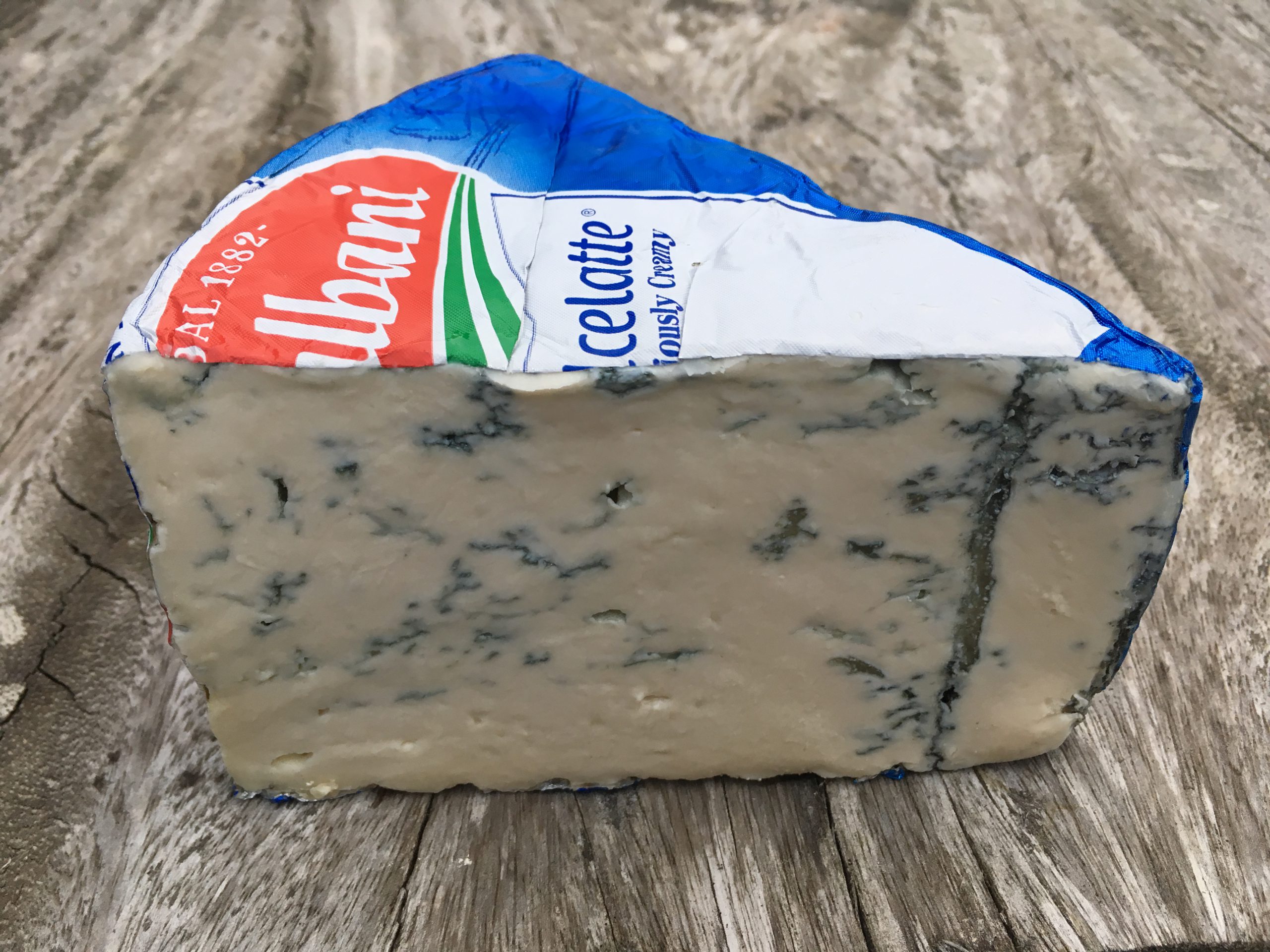
Dolcelatte starts with pasteurised cow’s milk. Once the curds are ready, they’re cut and popped into moulds. As the cheese matures, it’s gently pierced with thin needles to let in a bit of air and encourage those blue veins to appear. The end result is a marbled cheese, with colours running from pale green to blue all the way through.
The rind is usually thin and soft, sometimes with a hint of orange or pink. Inside, the cheese is ivory or pale straw, and it’s so soft and spreadable it might just slump a little if you leave it out. Unlike the firm, crumbly blues, Dolcelatte is all about comfort.
Dolcelatte – Jen’s Tasting Notes
Dolcelatte is mild, creamy, and just a little bit sweet. If you give it a sniff, you might pick up fresh cream, a bit of butter, and just a whisper of blue cheese minerality. It doesn’t have the big, bold aroma of Roquefort PDO or Blue Stilton PDO, so if you’re not sure about blue cheese, this one’s a gentle way in.
Take a bite and you’ll notice how smooth and buttery Dolcelatte is, it really coats your tongue. The blue veins bring a gentle tang and a little spice, but nothing too bossy. There’s a lovely balance of sweet and savoury, with hints of milk, a bit of light mushroom, and just a touch of nuttiness.
The texture is one of Dolcelatte’s best bits. When it’s ripe, it’s so soft you could almost eat it with a spoon, perfect for spreading or stirring into your favourite dishes. The finish is clean and just a little tangy, with a creamy aftertaste that hangs around in the nicest way.
How to Serve and Pair Dolcelatte
- Make sure you take it out of the fridge a good hour before you want to eat it so it can come up to room temperature.
- Classic pairings: Sweet wines are a classic match. I like to keep it all Italian with a Moscato d’Asti, it really brings out the cheese’s sweetness and balances the blue veins.
- Something a little different: If you’re more into beer, there are good options too. A malty brown ale goes nicely with Dolcelatte; the caramel notes in the beer work well with the cheese’s creamy sweetness. It’s a pairing worth trying if you fancy something a bit different.
- On the plate: If you’re putting together a cheeseboard, Dolcelatte is lovely with fresh fruit like pears, figs, or grapes. A drizzle of honey or a spoonful of fig jam brings out its sweetness, and a handful of toasted walnuts or hazelnuts adds a bit of crunch. This cheese can really make a cheese board feel like a treat.
- In the kitchen: Dolcelatte is also a handy one for cooking. It melts beautifully, so you can stir it into risotto for extra richness, crumble it over pizza, or blend it into pasta sauces. It’s delicious spread on warm bread or mixed into mashed potatoes for a bit of luxury. If you’re after something a little indulgent, this cheese is a good shout.
Jen’s note: Dolcelatte was actually created for export, especially for the British, who liked blue cheese but sometimes found traditional Gorgonzola a bit too strong. In that way, Dolcelatte was ahead of its time; made to suit global tastes as well as local ones, and it helped Italian cheesemakers find new fans all over the world.
Buying Dolcelatte
- Brand or Producer: Galbani
- Product name: Dolcelate
- Milk: Cow
- Country: Italy
- Region: Lombardy
- Strength: Mild
- Vegetarian: No
- Suitable for pregnancy: No
- Allergens: MILK
Sizes and Prices
- 100g wedge, £3.30
- 500g wedge, £16.50
Storage Advice
- Keep refrigerated
- Wrap in waxed paper or cling film
- Remove from the fridge before serving
- Consume within 10 to 14 days of opening
Delivery and Collection
- UK wide courier delivery
- Click and collect from our Pangbourne shop
- Free local delivery available for selected postcodes
Ingredients (Allergens are listed in capitals)
MILK, salt, starter cultures, rennet, Penicillium Roqueforti