Description
Aged Emmentaler AOP Cheese
About Emmentaler AOP Cheese
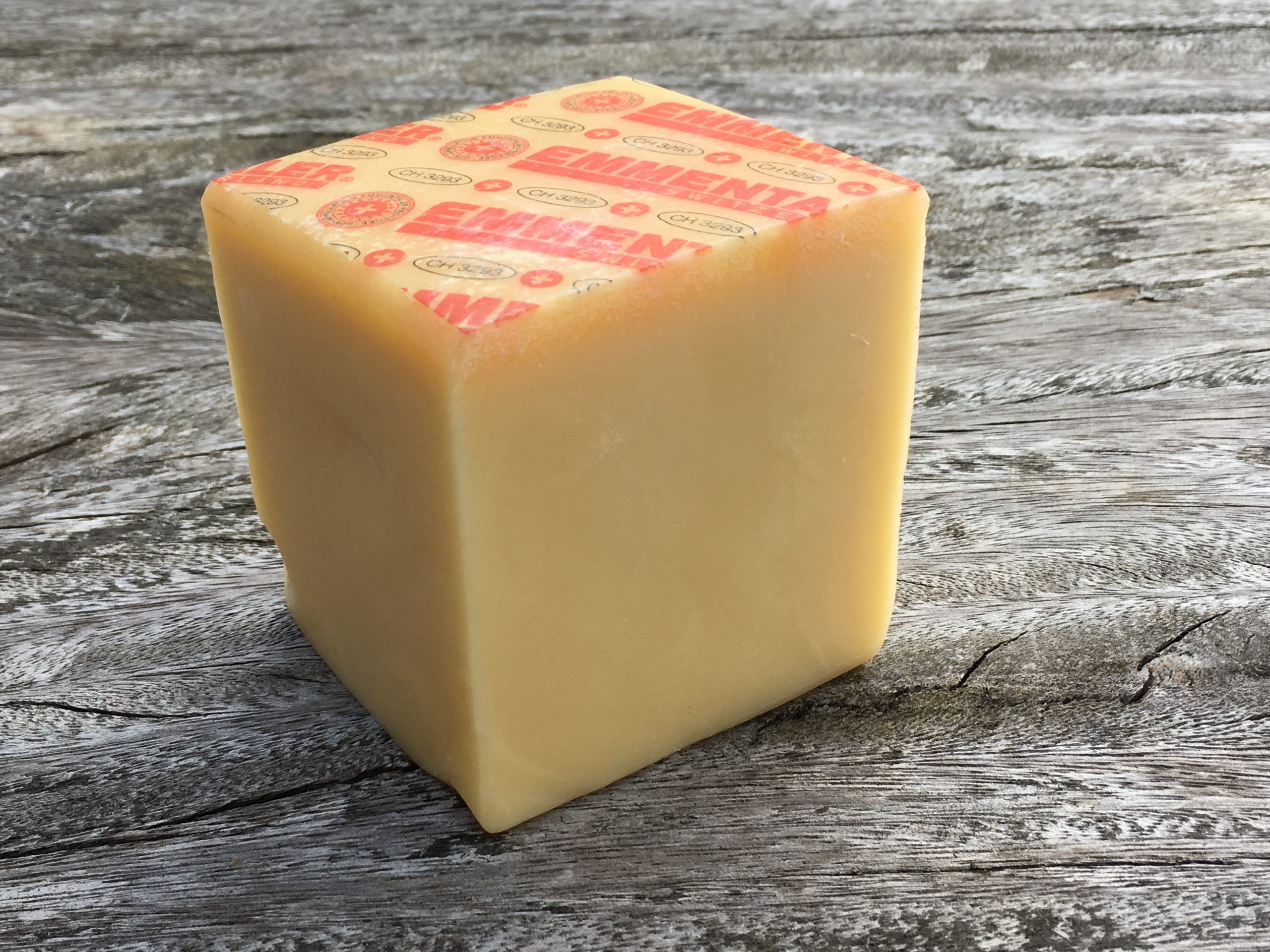
Emmentaler AOP is probably the most famous Swiss cheese. You’ll know it by its big, cherry-sized holes and golden colour. It has a long history and plenty of tradition. It’s mostly made in the Emme Valley in Bern. Every wheel is a small slice of Swiss countryside and culture.
Emmentaler’s story goes back to the 1200s in the lush Emmental valley, where the pastures are perfect for cows and the cool air is just right for making cheese. Because farmers had extra milk, they began making large wheels of cheese to help it last through the seasons. By the 1500s, Emmentaler was already spreading beyond Switzerland.
Those huge wheels, sometimes up to 120 kilos, weren’t just for show. As bigger cheeses aged better and could survive long journeys without going off, they became increasingly important. By the 1700s and 1800s, Emmentaler was one of Switzerland’s top exports. As a result, cheesemakers from the region even travelled around Europe (and as far as the US), teaching others how to make Swiss-style cheese.
Protected by AOP Tradition
However, with all that fame came plenty of copycats. Soon, you could find “Emmental” cheeses being made far from Switzerland, and some of them didn’t have much in common with the real thing. In response, Swiss cheesemakers decided it was time to protect their cheese and its good name.
That’s where the AOP label comes in. In Switzerland, this means every step, from the cows’ milk to the ageing, happens in the right place and in the traditional way.
For Emmentaler AOP, the milk must come from cows raised in designated regions. These are mainly the cantons of Bern and Lucerne, and the surrounding areas. The cheese must be made in traditional village dairies with raw milk. Then, it must age for at least 4 months, though many wheels mature up to 12 months or more.
Every wheel receives an official Emmentaler AOP stamp bearing the dairy’s number, so you know its exact origin. This isn’t just about quality; it helps sustain rural communities and preserves traditional cheesemaking.
Emmentaler AOP – Jen’s Tasting Notes
The most distinctive feature of Emmentaler AOP is its holes, or “eyes.” These form during fermentation, when natural bacteria produce carbon dioxide. As the cheese matures, the gas creates pockets, giving the cheese its signature round openings.
The Emmentaler AOP we have is aged for just 4 months, so it’s classed as ‘mild’. That means it’s a little bit sweet and buttery, with a gentle nutty flavour. The texture is lovely and springy.
How to Serve and Pair Emmentaler
- Make sure you take it out of the fridge a good hour before you want to eat it so it can come up to room temperature.
- Classic pairings: I like to keep things simple, so I’d go for a glass of dry Swiss white wine; Chasselas is a classic that brings out those delicate, nutty notes.
- Something a little different: If red wine is more your style, try a light-bodied red, such as a Pinot Noir, to complement the cheese’s mild sweetness without overpowering it.
- On the plate: I don’t usually include Emmentaler on a cheeseboard, but it pairs beautifully with fresh, crusty bread and a touch of sweet butter, making it a simple alpine-style snack.
- In the kitchen: In a classic Swiss fondue, Emmentaler is usually mixed with other Alpine cheeses for that smooth, aromatic melt. It’s also brilliant in sandwiches, quiches, or melted on top of French onion soup for a golden, bubbly crust.
Jen’s note: Historically, cheesemakers believed that the quality and size of the holes were a sign of skill and even luck. Wheels with too few holes were once considered inferior, while those with beautifully formed, evenly spaced eyes were prized. Today, technology can measure and monitor eye formation, but traditional producers still take pride in achieving that perfect constellation of holes through natural means.
Buying Emmentaler
- Brand or Producer: Emmi
- Product name: Mild Emmentaler AOP
- Milk: Cow
- Country: Switzerland
- Region: Bern
- Strength: Mild
- Vegetarian: No
- Suitable for pregnancy: Yes
- Allergens: MILK
Sizes and Prices
- 100g wedge, £3.75
- 500g wedge, £18.75
- Larger pieces available on request
Storage Advice
- Keep refrigerated
- Wrap in waxed paper or cling film
- Remove from the fridge before serving
- Consume within 10 to 14 days of opening
Delivery and Collection
- UK wide courier delivery
- Click and collect from our Pangbourne shop
- Free local delivery available for selected postcodes
Ingredients (Allergens are listed in capitals)
MILK, starter cultures, rennet, salt