Description
Fourme d’Ambert PDO Cheese
About Fourme d’Ambert PDO
Fourme d’Ambert is one of France’s oldest blue cheeses and a favourite of mine. Made in the Auvergne region from cow’s milk, it has a cylindrical shape with gentle blue marbling. Unlike stronger blue cheeses, this one is smooth, balanced, and subtle. Its PDO status means it’s made traditionally, reflecting the region’s heritage.
This cheese goes way back; records of soft, veined cheeses in the Auvergne date back to Roman times. By the Middle Ages, it was already a staple for monks and locals. Fourme d’Ambert gets its name from the town of Ambert, right in the heart of the region’s dairy country.
The History
Legend says Fourme d’Ambert was first made in small cylindrical moulds to ensure even maturation. Farmers found that piercing the curd with metal rods encouraged the growth of blue mould, creating its marbled appearance. It’s much milder than Roquefort, so it’s a good choice if you’re unsure about blue cheese.
By the 19th century, Fourme d’Ambert was widely distributed throughout France. By the 19th century, Fourme d’Ambert was enjoyed throughout France. As industrial production took over in the 20th century, local producers stepped in to protect traditional methods, making it one of the earliest French cheeses to gain European recognition. This PDO designation guarantees that the cheese is not only made according to traditional methods but also originates from a specific geographical area, preserving its connection to Auvergne’s pastures and cultural identity.
Protected By Its PDO Status
To earn PDO status, Fourme d’Ambert must be made in a specific part of France, where volcanic soil and pastures give the milk its flavour. It’s made from cow’s milk, often from Montbéliarde or Salers cows grazing in the highlands. The milk is made into curds, shaped into cylinders, and pierced with rods to let blue mould develop. After ageing for at least 28 days, you have a creamy cheese with blue veins.
Thanks to PDO protection, Fourme d’Ambert keeps its traditional shape and flavour. It stands out from generic blue cheeses found elsewhere.
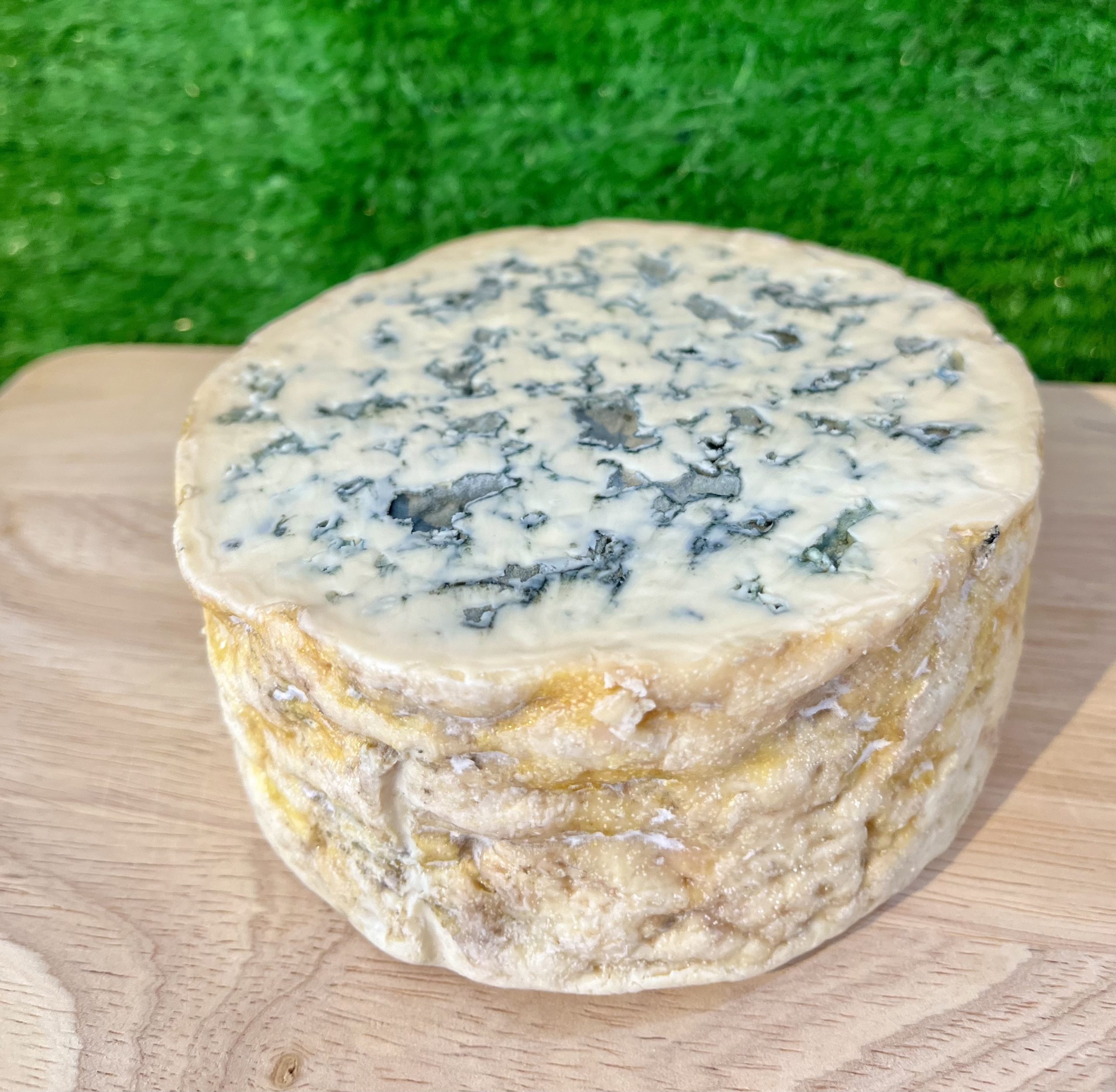
It comes as a neat cylindrical wheel with a pale ivory interior and delicate blue-grey marbling. The rind is smooth and slightly waxy, with yellow and beige tones. Inside, it’s creamy and dense but still easy to spread and firm enough to slice.
Fourme d’Ambert – Jen’s Tasting Notes
On the nose, it offers mild earthiness, nutty notes, and hints of hay, fresh butter, and blue mould. Compared to stronger blues like Roquefort or Stilton, its aroma is milder and more restrained. The flavour is sweet and buttery at first, then lightly tangy with umami depth. Nutty and faint floral notes reflect the milk and pastures, finishing mild and approachable, ideal for newcomers to blue cheese.
Fourme d’Ambert is refined and elegant, offering blue cheese character without being overpowering.
How to Serve and Pair Fourme d’Ambert PDO
- Make sure you take it out of the fridge a good hour before you want to eat it so it can come up to room temperature.
- Classic pairings: I’m a big fan of a sweet dessert wine with blue cheeses, and Fourme d’Ambert is no exception. A Sauternes works particularly well.
- Something a little different: If beer is more your thing, I’d suggest a blonde ale as the gentle malt accentuates the mild blue flavours.
- On the plate: All you really need with this cheese is a few plain crackers, some fresh sliced pears for sweetness, and a couple of walnuts for crunch. These mild accompaniments highlight the cheese’s subtlety rather than competing with its flavour.
- In the kitchen: It also melts well, making it great for sauces, quiches, or gratins.
Jen’s note: While many associate French blue cheese with Roquefort PDO, Fourme d’Ambert is actually one of France’s oldest blue cheeses, with roots that predate the modern varieties. Historical records from the Middle Ages describe blue-veined cheeses in the Auvergne region, suggesting that local farmers were experimenting with mould-ripened cheeses long before industrial production.
Buying Fourme d’Ambert PDO
- Brand or Producer: Fromagerie St Flour
- Product name: Fourme d’Ambert PDO
- Milk: Cow
- Country: France
- Region: Auvergne
- Strength: Medium
- Vegetarian: No
- Suitable for pregnancy: No
- Allergens: MILK
Sizes and Prices
- 100g wedge, £2.50
- 500g wedge, £12.50
Storage Advice
- Keep refrigerated
- Wrap in waxed paper or cling film
- Remove from the fridge before serving
- Consume within 10 to 14 days of opening
Delivery and Collection
- UK wide courier delivery
- Click and collect from our Pangbourne shop
- Free local delivery available for selected postcodes
Ingredients (Allergens are listed in capitals)
MILK, starter cultures, rennet, salt, Penicillium Roqueforti