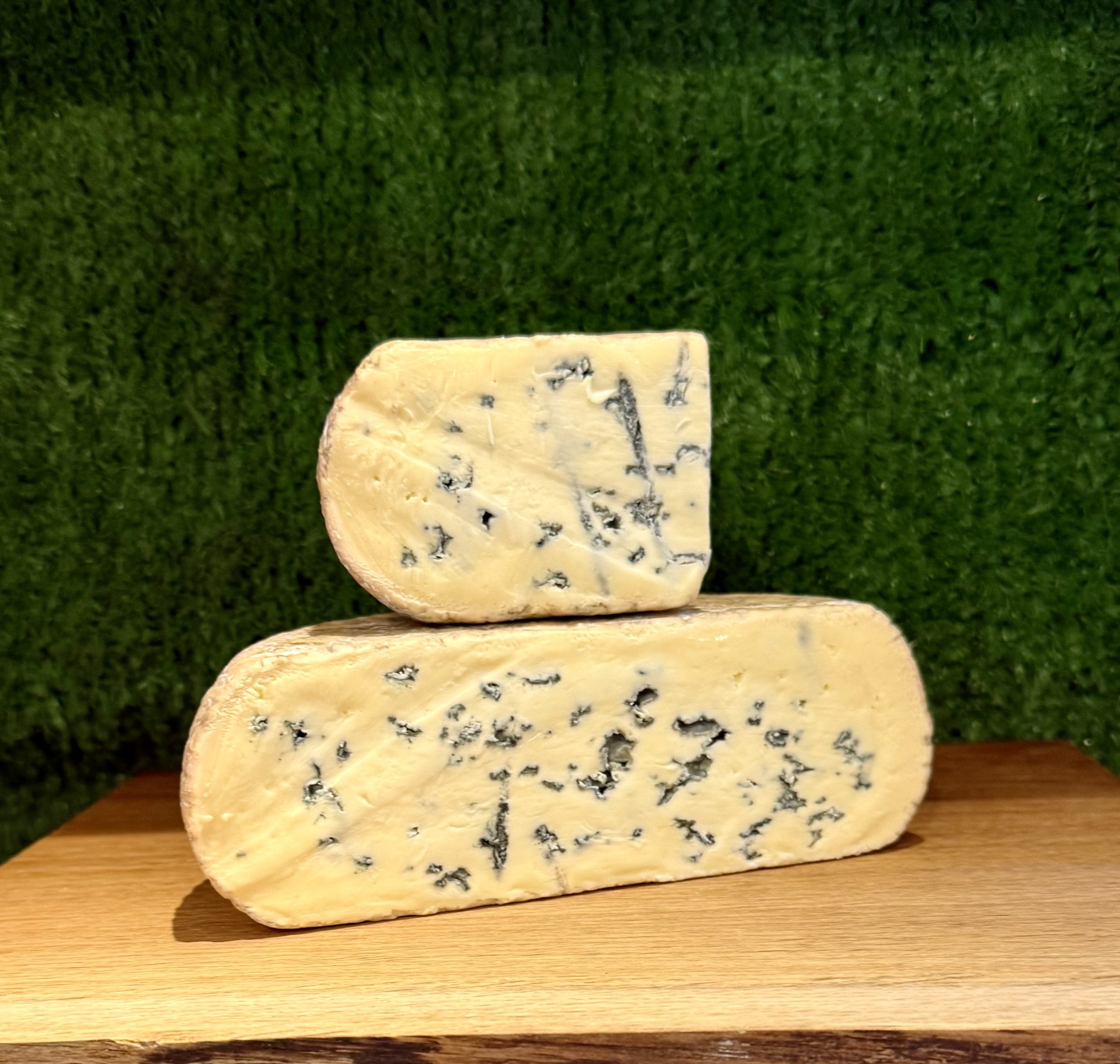
Description
Kingcott Blue Cheese
About Kingcott Blue Cheese
Kingcott Blue is a creamy, raw milk blue cheese made by Kingcott Dairy on their family farm in Kent. And that raw milk immediately makes it an interesting addition to the British blue cheese counter.
The milk comes from the farm’s own herd of cows, so the journey from milk to finished cheese happens right there on the farm. There’s something I particularly like about farmhouse cheeses like this — the people making the cheese have a connection to the milk long before it ever reaches the cheesemaking vat.
Kingcott Blue is rich and creamy with gentle blue veining and enough saltiness and tang to give it character without becoming overpowering. If you like blue cheese, there’s plenty to enjoy, but it’s also wonderfully approachable if you’re still finding your way around them.
From Their Cows to Their Cheese
Kingcott is very much a family farm. The Reynolds family have been farming there since the middle of the 20th century, with cheesemaking becoming part of the story later on.
The dairy uses milk from its own herd to make its cheeses, giving the family control over the process right from looking after the cows through to maturing the finished cheese.
For me, that connection is an important part of farmhouse cheesemaking. Milk isn’t simply an ingredient that arrives at the dairy; it’s something they’ve produced themselves, and ultimately the quality of the cheese begins with the quality of that milk.
A Rare Raw Milk Blue
One of the things that particularly attracted me to Kingcott Blue is that it’s made with raw cow’s milk. There aren’t huge numbers of British raw milk blue cheeses around, which immediately makes this one worth exploring.
Blue mould cultures are introduced during cheesemaking and the cheese is pierced as it matures, allowing oxygen into the paste so those characteristic blue veins can develop.
As the cheese matures, those veins bring saltiness, gentle spice and savoury flavours to the rich, creamy paste. It’s that contrast between the buttery cheese and the blue that makes Kingcott so enjoyable.
Kingcott Blue – Jen’s Tasting Notes
Kingcott Blue has a wonderfully creamy texture, streaked with blue veins that give you little pockets of extra flavour as you eat.
The aroma is buttery and milky with a gentle earthiness, while the first taste is rich and creamy with a subtle sweetness. Then the blue starts to come through, bringing saltiness, a little tang and a gentle peppery spice.
What I particularly like is the balance. The blue has enough character to make itself known, but it doesn’t completely take over the cheese. Instead, that creamy richness stays with you all the way through.
Like all good blue cheeses, it changes as it matures, becoming softer and more savoury with time. And, purely in the interests of cheese research, I’m always happy to keep tasting it at different stages!
How to Serve and Pair Kingcott Blue
- Make sure you take it out of the fridge a good hour before you want to eat it so it can come up to room temperature.
- Classic pairing: Sweet and salty is one of the great cheese combinations, so try Kingcott Blue with a sweet sherry. The richness of the wine works beautifully against the salty blue.
- Something a little different: A crisp Riesling is a lovely alternative. Its acidity keeps all that creaminess in check while the fruit works with the gentle tang of the blue.
- On the plate: Fresh or dried figs and a handful of toasted walnuts are hard to beat. You get sweetness, crunch and creamy blue all in one mouthful.
- In the kitchen: Kingcott makes a fabulous blue cheese sauce for steak or burgers. Melt it gently with a little cream — although taste before adding any salt because the cheese may have done that job for you.
Jen’s note: Raw milk British blues are few and far between, so I was really excited when I first tried Kingcott Blue. Thankfully it lived up to expectations — creamy, characterful and just blue enough.
Buying Kingcott Blue
- Brand or Producer: Kingcott Dairy
- Product name: Kingcott Blue
- Milk: Cow
- Country: England
- Region: Kent
- Strength: Medium to strong
- Vegetarian: Yes
- Suitable for pregnancy: Yes
- Allergens: MILK
Sizes and Prices
- 100g wedge, £4.10
- 500g wedge, £20.50
- Whole wheel (approx. 1.2kg), available to pre-order
Storage Advice
- Keep refrigerated
- Wrap in waxed paper or cling film
- Remove from the fridge before serving
- Consume within 10 to 14 days of opening
Delivery and Collection
- UK wide courier delivery
- Click and collect from our Pangbourne shop
- Free local delivery available for selected postcodes
Ingredients (Allergens are listed in capitals)
MILK, starter cultures, rennet, salt, Penicillium Roqueforti