Description
Camembert Cheese
About Camembert
Camembert always makes me think of the French countryside; you can almost picture green fields just by looking at that perfect white rind. It’s one of those cheeses that everyone seems to know. Although they look similar, it is quite different from Brie. Camembert is a bit more rustic, a bit more expressive, and you can really taste the Normandy pastures in every bite.
The Story Behind The Cheese
Camembert’s story goes back to the late 1700s in the little village of Camembert, Normandy. Legend says that a farmer named Marrie Harel learned her cheesemaking secrets from a priest on the run during the French Revolution. True or not, the lush grass and old dairy traditions of Normandy gave us this wonderful cheese.
Building on these traditions, the cheesemaking process is still notably hands-on. Once the milk has gently set, the curds are scooped into moulds by hand, no pressing here, which keeps all that lovely moisture in and gives Camembert its signature softness. A bit of salt, and then the magic starts as the white rind slowly appears, thanks to Penicillium camemberti.
Camembert – Jen’s Tasting Notes
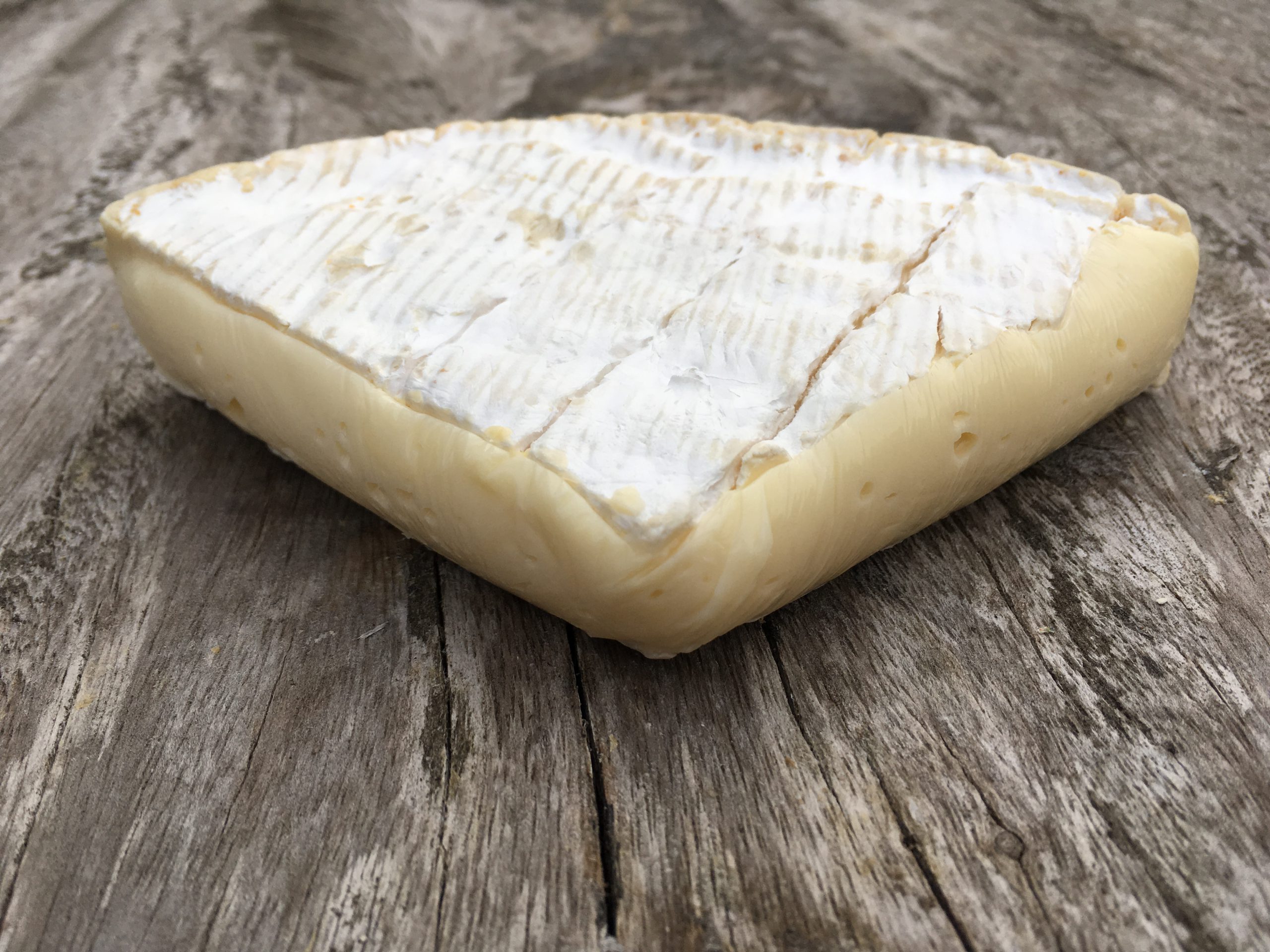
Camembert can vary widely depending on who makes it, how old it is, and even the milk used. Still, there are a few things you can always count on. That snowy white, downy rind is unmistakable. Underneath, you’ll find a pale, ivory centre that gets glossier and softer as it matures.
Moving to its aromas, you’ll often get notes of fresh mushrooms and a bit of butter when you cut into a Camembert. Sometimes there’s even a hint of cabbage or brassica if it’s really ripe. When it’s just right, all these earthy notes come together without becoming too much. The developing texture is equally intriguing. When Camembert is young, you’ll notice a firmer, chalky centre with a creamy layer just under the rind. Leave it to ripen, and it turns beautifully soft; sometimes you can almost scoop it with a spoon. It’s rich and coats the mouth, but never feels heavy.
The flavour is gentle, but there’s a lot going on. I always get a first taste of fresh cream and sweet milk. Then those sautéed mushroom notes come through, sometimes with a bit of cauliflower or cabbage. If you pay attention, you might even spot a hint of toasted nuts or a suggestion of garlic or onion at the end. Compared to Brie, Camembert feels more rustic and intense, with deeper mushroom and earthy flavours. The rind adds a gentle bitterness that offsets the creamy sweetness inside. At its best, Camembert is all buttery richness and earthy notes, with a tangy finish to keep things tasty.
How to Serve and Pair Camembert
- Make sure you take it out of the fridge a good hour before you want to eat it so it can come up to room temperature.
- Classic pairings: To complement those flavours, a glass of unoaked or lightly oaked Chardonnay is a lovely match; it brings out the buttery side of Camembert without drowning out those gentle flavours.
- Something a little different: Alternatively, you could go classic and pour a traditional Normandy cider. The bright acidity and gentle fizz are perfect for refreshing your palate between bites.
- On the plate: A crusty baguette is classic, alongside fresh apples for juicy acidity. Stone fruits like apricots work especially well in summer.
- In the kitchen: If you want to try something special, baking a whole Camembert until it’s gooey and molten makes a brilliant centrepiece. Try tucking in some garlic, rosemary, or even a splash of white wine for extra flavour.
Jen’s note: When cooking with Camembert, remember that gentle heat is your friend. Too much and it can split, so just warm it until it’s soft and you’ll keep all that lovely texture and flavour.
Buying Camembert
- Brand or Producer: Isigny Sante Mère
- Product name: Camembert
- Milk: Cow
- Country: France
- Region: Normandy
- Strength: Strong
- Vegetarian: No
- Suitable for pregnancy: No
- Allergens: MILK
Sizes and Prices
- 100g wedge, £3.95
- 500g wedge, £19.75
Storage Advice
- Keep refrigerated
- Wrap in waxed paper or cling film
- Remove from the fridge before serving
- Consume within 10 to 14 days of opening
Delivery and Collection
- UK wide courier delivery
- Click and collect from our Pangbourne shop
- Free local delivery available for selected postcodes
Ingredients (Allergens are listed in capitals)
MILK, salt, starter cultures, rennet, mould cultures