Description
Reblochon PDO Cheese
About Reblochon PDO
Reblochon PDO is a classic French cheese that evokes the Alps. It is the 3rd biggest selling PDO cheese in France and it even has its own website dedicated to it, which you can access here!.
The History
The story of Reblochon dates back to the 13th century, in the valleys of Haute-Savoie and nearby Savoy. Back then, mountain farmers had to pay a tax to the landowners, based on how much milk their cows produced. To keep the taxman happy (but not too happy), the farmers would only half-milk their cows when the agent came round. Once he’d gone, they’d nip back and finish the job, a sneaky second milking called reblocher in the local dialect, which means ‘to pinch the cow’s udder again.’
That second milking didn’t yield much milk, but what it did yield was extra rich and creamy, perfect for making small, soft cheeses just for the farmers and their families. Over time, these little cheeses got their own name: Reblochon, the cheese of the second milking.
Protected By Its PDO Status
From these humble beginnings, Reblochon started to make a name for itself. What began as a clever bit of rural problem-solving soon became one of the region’s favourite cheeses. By the 1700s and 1800s, you’d find Reblochon at local markets and in plenty of Savoyard kitchens. People loved it because it matured quickly and still packed in loads of flavour, a real bonus when you didn’t have much space to stash things in the mountains.
Reblochon received its official stamp of approval in 1958, when it was awarded Appellation d’Origine Contrôlée (AOC) status, making it one of the first French cheeses to receive this kind of protection. Building on this national recognition, in 1996, it joined the European club as a Protected Designation of Origin (PDO) cheese.
This PDO status means that Reblochon must be made in certain parts of Haute-Savoie and Savoie, right in the heart of the French Alps. The landscape there, with its lush summer pastures and chilly winters, gives the milk its special character. Only milk from approved Alpine breeds like Abondance, Montbéliarde, and Tarentaise is allowed, and these cows munch on all sorts of mountain grasses and herbs, which really comes through in the flavour.
The Make
Reblochon is still made the traditional way, using raw cow’s milk for farmhouse cheeses or thermised milk for dairy-made ones. Strict rules govern how the curds are handled, moulded, washed, and ripened. Cheese must be aged for at least 15 days, though many mature for longer to develop extra flavour. With PDO protection, Reblochon isn’t just a style of cheese; it’s a true taste of the Alps, preserving the region’s traditions and landscape.
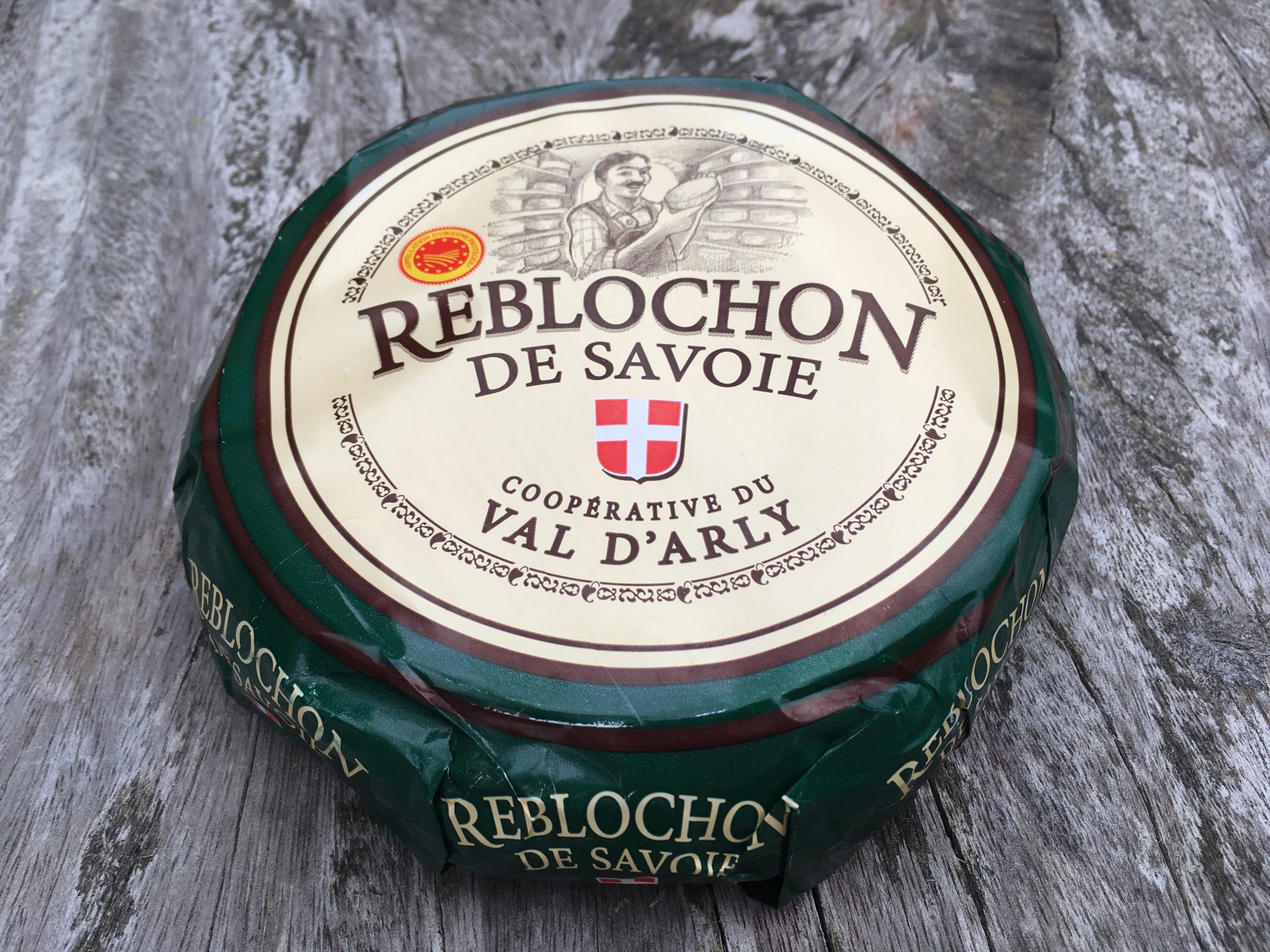
Turning to the cheese itself, Reblochon is a small, round wheel, usually about 450g, and around 14 cm across and 3 to 4 cm thick. It’s just the right size for sharing with friends or family.
To make Reblochon, the raw milk is gently warmed, then rennet is added to set it into curds. The curds are cut, lightly pressed, and popped into moulds, with lots of turning to help them drain evenly. Once they’re out of the moulds, they get a sprinkle of salt and are sent off to the ageing cellars. The next step, the ageing process, defines the cheese’s unique qualities. While they’re maturing, the cheeses are washed with brine (that’s salty water), which gives them their thin, slightly sticky rind and that pale orange colour you see on washed-rind cheeses.
Reblochon PDO – Jen’s Tasting Notes
Most of those earthy, nutty aromas come from the rind. These hallmark traits make choosing authentic Reblochon all the more important. If you’re after the traditional stuff, look for a green casein label for farm. If you want the real deal, look for a green casein label for farmhouse Reblochon, or a red one for dairy-made. It’s a small detail, but it makes all the difference if you’re after authenticity.
Its creamy ivory interior has a smooth, slightly elastic paste. The aroma is gentle yet distinct, offering notes of warm cream, damp cellar, toasted nuts, and a mild barnyard earthiness, all aromatic yet rarely overpowering. The texture is velvety and supple; when fully ripe, it yields easily to a knife and may even ooze slightly at room temperature.
Unlike firmer Alpine cheeses, Reblochon has a soft, almost custard-like feel near the rind. The flavour begins with a mild sweetness, followed by a creamy, buttery mid-palate, and subtle nuttiness with hints of hazelnut. The finish is light, savoury, and earthy. Compared to stronger washed-rind cheeses like Époisses, Reblochon is refined and balanced, offering depth and complexity without being aggressively pungent.
How to Serve and Pair Reblochon PDO
- Make sure you take it out of the fridge a good hour before you want to eat it so it can come up to room temperature.
- Classic pairings: If you want to keep things local, try pairing Reblochon with a glass of Apremont, a crisp, mineral white wine from Savoie made with the Jacquère grape.
- Something a little different: I’m also a big fan of a good dry cider; the apple acidity is just the thing to perk up your palate.
- On the plate: Sometimes, all you really need is some crusty bread and a few pickled onions on the side for a bit of contrast.
- In the kitchen: The most famous dish made with Reblochon is Tartiflette. This is a classic dish from the Savoie region, originating in the valley of Aravis, home of Reblochon cheese.
Jen’s note: Farmhouse Reblochon (or Reblochon fermier) has to be made right on the farm, using milk from just one herd. That means you get real seasonal variation and a true taste of the farm, a level of detail you don’t often see these days.
Buying Reblochon PDO
- Brand or Producer: Fromagerie Chabert
- Product name: Reblochon PDO
- Milk: Cow
- Country: France
- Region: Haute-Savoie
- Strength: Medium
- Vegetarian: No
- Suitable for pregnancy: No
- Allergens: MILK
Sizes and Prices
- Half a cheese (approx. 225g), £7.00
- Whole cheese (approx. 450g), £14.00
Storage Advice
- Keep refrigerated
- Wrap in waxed paper or cling film
- Remove from the fridge before serving
- Consume within 10 to 14 days of opening
Delivery and Collection
- UK wide courier delivery
- Click and collect from our Pangbourne shop
- Free local delivery available for selected postcodes
Ingredients (Allergens are listed in capitals)
MILK, rennet, salt, ferments