Description
Parmigiano Reggiano PDO Cheese
About Parmigiano Reggiano PDO Cheese
Parmigiano Reggiano PDO reigns as Italy’s most celebrated cheese. Made in a small corner of northern Italy using age-old methods, this hard, crumbly cheese is famous for its full flavour and those lovely little crunchy crystals. You might know it as Parmesan, but the real deal is something special, with a long history and plenty of stories behind it.
Building on this reputation, Parmigiano Reggiano PDO has been around for nearly 900 years, which is quite something. It all started with monks in Parma and Reggio Emilia who needed a way to use up extra milk from their herds. Their solution? Make a big, sturdy cheese that would last for ages and could be sent far and wide.
By the 1200s and 1300s, Parmigiano Reggiano PDO was becoming a famous cheese. It was even mentioned in Boccaccio’s Decameron, where a mountain made entirely of grated Parmesan is imagined. This cheese has long been a cherished part of Italian life. Throughout the ages, Parmigiano Reggiano PDO has stayed much the same, it still comes down to just milk, salt, and rennet.
Protected by PDO Tradition
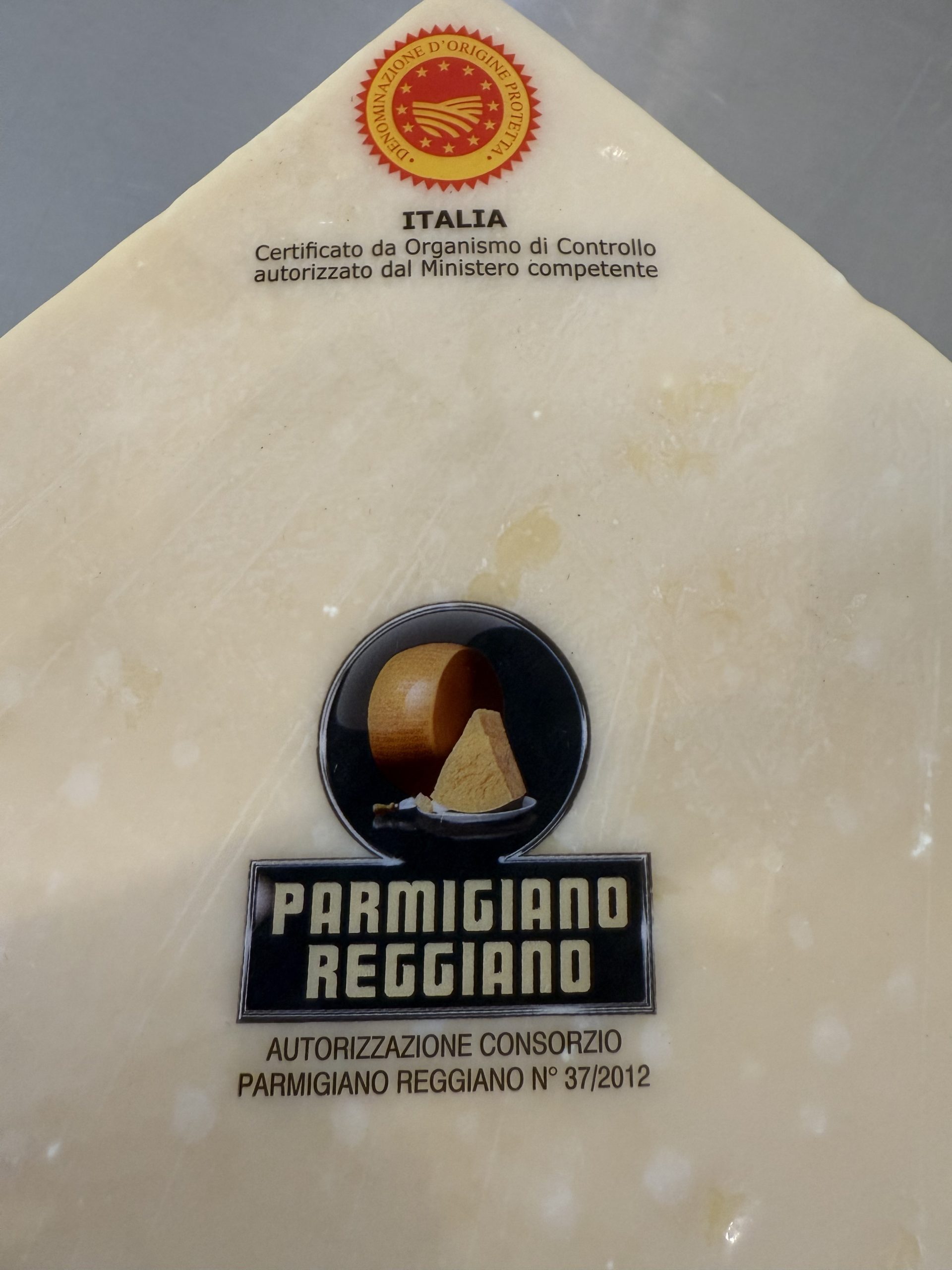
Parmigiano Reggiano holds Protected Designation of Origin (PDO) status under European Union law. This means that only cheese produced in the provinces of Parma, Reggio Emilia, Modena, and parts of Bologna (west of the Reno River) and Mantua (south of the Po River) can legally bear the name. Every wheel must be made from locally sourced cow’s milk, and the cheese can contain only three ingredients: raw cow’s milk, natural whey starter, and calf rennet. Each wheel must then age for at least 12 months. All of this is overseen by the Consorzio del Formaggio Parmigiano Reggiano, established in 1934 to protect the authenticity and quality of the product.
Thanks to these strict rules, you can always trace a wheel of Parmigiano Reggiano right back to where it was made. It’s what sets the real thing apart from the many imitations out there.
Made Slowly, with Care
Each wheel is a real heavyweight, tipping the scales at nearly 40 kilos and using up about 550 litres of milk. The process begins with the evening milk, left to settle overnight so the cream rises and separates. Next, this settled milk is mixed with fresh morning milk in large copper vats (chosen for their even heat conduction). After stirring and heating, rennet is added, thickening the mixture into curds (solids) and whey (liquid). Finally, the curds are shaped into their familiar rounds.
After a careful three-week soak in salt, each wheel ages on wooden shelves for a minimum of a year; sometimes two, three, or even four years, developing flavour and character with time. Patience allows the secret ingredient of time to work its magic.
Parmigiano Reggiano PDO – Jen’s Tasting Notes
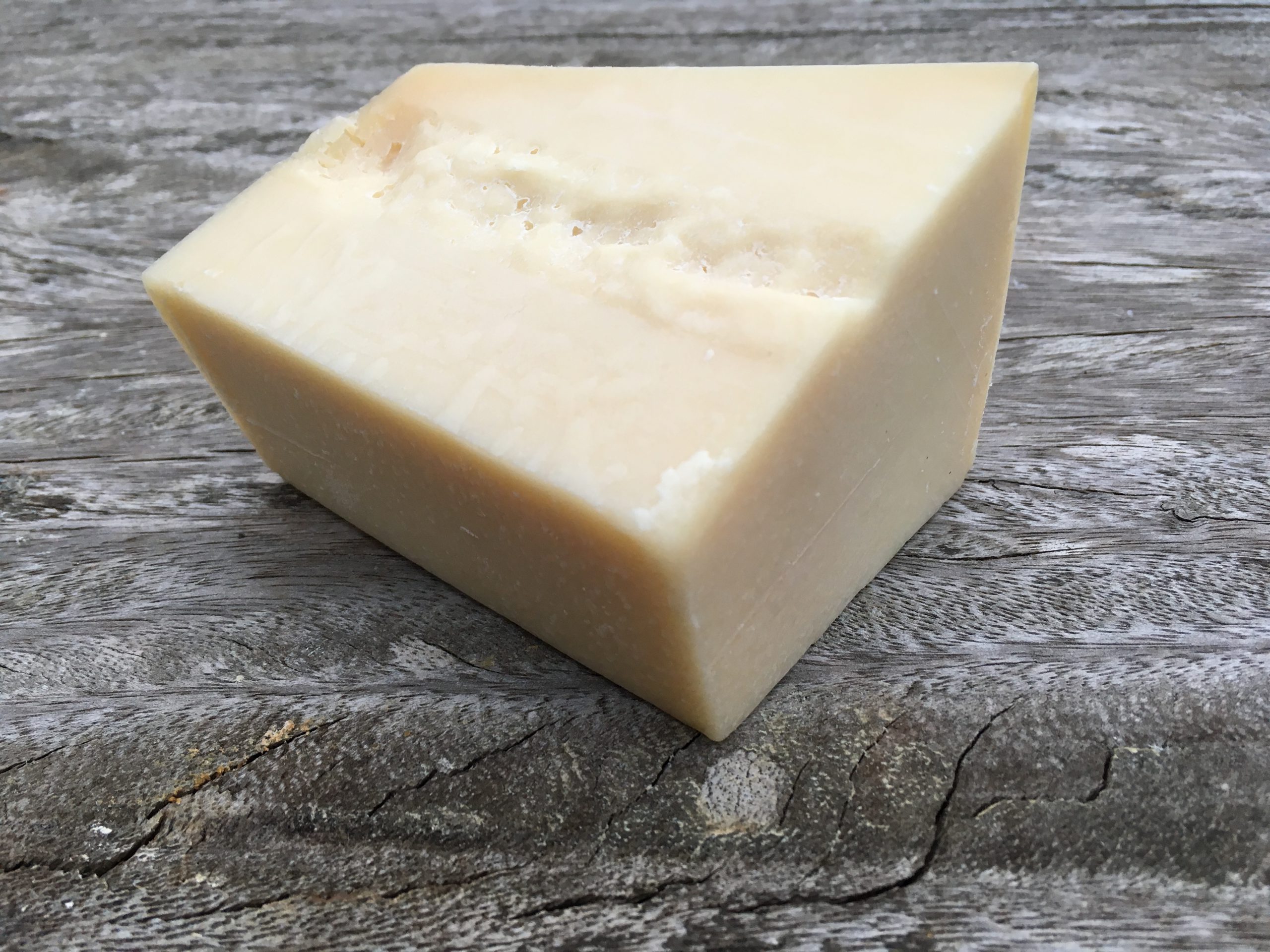
It is famous for its crumbly, crystal-flecked texture and those wonderful layers of savoury flavour. It has a pale, straw-coloured interior with a natural golden rind stamped repeatedly with its name and identifying marks. The texture is dry yet mildly creamy on the tongue. It breaks into irregular shards rather than slicing cleanly. Tiny white crystals (tyrosine amino acid crystals) add a pleasant crunch, especially in well-aged wheels.
On the nose, you’ll pick up notes of warm milk, butter, toasted nuts, and sometimes hints of hay or dried fruit. Ours is aged for at least 24 months. It’s full of umami flavours, with a pronounced nuttiness and subtle caramel notes.
How to Serve and Pair Parmigiano Reggiano
- Make sure you take it out of the fridge a good hour before you want to eat it so it can come up to room temperature.
- Classic pairings: I like to stick to an Italian paring and sparkling wines like Prosecco pair really well; they balance the cheese’s flavours.
- Something a little different: If you’re more of a beer drinker, a Belgian-style dubbel brings forward caramel and nutty notes in the cheese, which pair well with its richness.
- On the plate: Figs and dried apricots complement the cheese’s complexity. A drizzle of aged balsamic vinegar from Modena adds luxurious complexity.
- In the kitchen: Parmigiano Reggiano is essential in many Italian dishes. It grates beautifully and can be added to almost anything!
Jen’s note: Did you know that in tough times, Italian banks have actually accepted wheels of Parmigiano Reggiano as collateral for loans. Properly stored, these cheeses hold their value for years; so much so that some banks in Emilia-Romagna have vaults full of them!
Buying Parmigiano Reggiano
- Brand or Producer: Colla
- Product name: Parmigiano Reggiano PDO
- Milk: Cow
- Country: Italy
- Region: Piacenza
- Strength: Strong
- Vegetarian: No
- Suitable for pregnancy: Yes
- Allergens: MILK
Sizes and Prices
- 100g wedge, £5.10
- 500g wedge, £25.50
- Larger pieces available on request
Storage Advice
- Keep refrigerated
- Wrap in waxed paper or cling film
- Remove from the fridge before serving
- Consume within 10 to 14 days of opening
Delivery and Collection
- UK wide courier delivery
- Click and collect from our Pangbourne shop
- Free local delivery available for selected postcodes
Ingredients (Allergens are listed in capitals)
MILK, rennet, salt