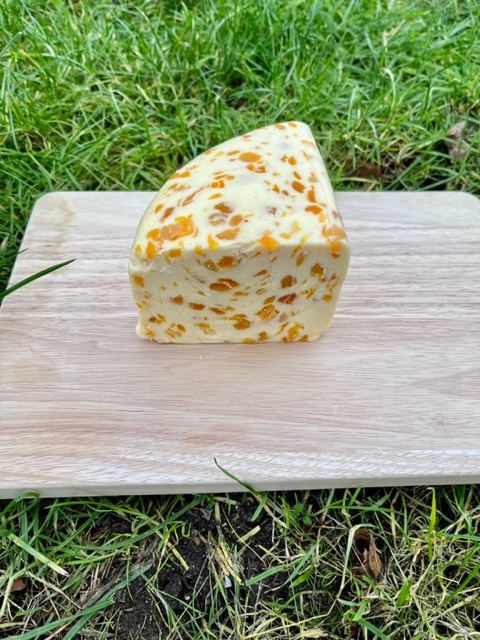
Description
Wensleydale with Apricots Cheese
About Wensleydale with Apricots
Wensleydale with Apricots is one of those cheeses that always makes me smile. It manages to be both wonderfully traditional and a bit cheeky at the same time. The cheese itself is crumbly and creamy, dotted with bright orange apricot pieces that make it look almost ready for a party. When you taste it, there’s that gentle lactic tang you expect from a good Wensleydale, but the mellow sweetness from the fruit lifts it into something really special.
To make Wensleydale with Apricots, cheesemakers start with pasteurised cow’s milk, add cultures and rennet, and cut the curds. Unlike cheddar, which gets pressed and aged until it’s dense, Wensleydale curds are treated gently, which is what gives you that lovely loose, crumbly texture. For the apricot version, they stir in finely chopped dried apricots before moulding the cheese, so you get a little burst of sweetness in every slice.
The finished cheese is firm but crumbles easily. It breaks apart cleanly, and you can always spot those cheerful apricot pieces peeking out from the pale ivory cheese.
The History of Wensleydale Cheese
Wensleydale’s story starts in the lush green valleys of North Yorkshire. Back in the 12th century, Cistercian monks arrived in the Yorkshire Dales and began making cheese from sheep’s milk. Over the years, they switched to cow’s milk, which is what gives us that lovely crumbly, slightly moist texture we now think of as classic Yorkshire Wensleydale.
By the 19th century, Wensleydale had become one of Britain’s best-known regional cheeses. Like so many old favourites, it had a rough patch during the industrial changes of the 20th century and nearly vanished. Luckily, local cheesemakers stepped in to save it, especially the team at Wensleydale Creamery in Hawes, who still make it the traditional way and clearly enjoy trying out new flavours.
Wensleydale with Apricots is a more recent twist, popping up in the late 20th century when British cheesemakers started adding fruit to their classic cheeses. Fruit and cheese have always been good friends, but dried apricots in Wensleydale turned out to be a real winner. The cheese’s gentle, slightly tangy character is just right for those sweet, chewy bits of fruit.
Wensleydale with Apricots – Jen’s Tasting Notes
When you smell Wensleydale with Apricots, it’s fresh and milky, with a gentle, yogurty tang. The apricots add a hint of honey and a soft, fruity aroma that always reminds me of summer.
The first taste is creamy and just a little tangy. Classic Wensleydale has that lemony brightness and gentle lactic flavour, but it never shouts. Almost straight away, the apricot’s sweetness comes through. The texture is a treat too: soft and chewy fruit against cool, crumbly cheese.
It’s the balance of flavours that makes this cheese so moreish. The apricots don’t just bring sweetness; they soften the tang and add a bit more depth. The finish is clean, gently fruity, and just a touch buttery, so even people who say they don’t like cheese usually end up enjoying it.
How to Serve and Pair Wensleydale with Apricots
- Make sure you take it out of the fridge a good hour before you want to eat it so it can come up to room temperature.
- Classic pairings: If you’re after a wine to go with Wensleydale with Apricots, I’d go for a lightly chilled off-dry Riesling, which picks up the fruit and matches the cheese’s gentle acidity. Prosecco is another favourite of mine, as the bubbles keep things lively between bites.
- Something a little different: For beer lovers, a crisp wheat beer is a great match for the cheese’s lactic freshness, and a fruity pale ale brings out the apricot notes nicely. I’d steer clear of very bitter IPAs, as they can easily overpower the cheese’s gentle tang.
- On the plate: I like to serve Wensleydale with Apricots with oatcakes or a lightly sweet digestive biscuit for that classic British touch. Fresh grapes and toasted almonds, work beautifully to bring out the fruitiness without taking over.
- In the kitchen: This cheese melts gently but not elastically, making it ideal for stuffing into chicken breasts or scattering over a warm spinach salad. It also works beautifully crumbled into scones for a sweet-savoury twist.
Jen’s note: During World War II, the British government standardised cheese production to prioritise efficiency and nutrition. Most regional varieties were suspended in favour of a single “Government Cheddar.” Wensleydale was one of the very few regional cheeses allowed to continue in limited form because it was considered particularly suitable for blending and processing. Apricot-studded Wensleydale wasn’t around back then, but its crumbly texture later made it perfect for adding fruit. In a roundabout way, the fact that Wensleydale survived the war means we get to enjoy this sweet-and-savoury favourite today.
Buying Wensleydale with Apricots
- Brand or Producer: Wensleydale Creamery
- Product name: Wensleydale with Apricots
- Milk: Cow
- Country: England
- Region: Yorkshire
- Strength: Mild to medium
- Vegetarian: Yes
- Suitable for pregnancy: Yes
- Allergens: MILK
Sizes and Prices
- 100g wedge, £2.90
- 500g wedge, £14.50
- 1/2 Wheel (approx. 1.2kg), available to pre-order
Storage Advice
- Keep refrigerated
- Wrap in waxed paper or cling film
- Remove from the fridge before serving
- Consume within 10 to 14 days of opening
Delivery and Collection
- UK wide courier delivery
- Click and collect from our Pangbourne shop
- Free local delivery available for selected postcodes
Ingredients (Allergens are listed in capitals)
MILK, starter cultures, rennet, salt, sweet dried apricots