Description
Roquefort Papillon PDO Cheese
About Roquefort Papillon PDO
Papillon Roquefort PDO is one of those blue cheeses that really stands out. It’s steeped in history and tradition, and you can taste the care that goes into every wheel. This cheese is made only in the limestone caves of Roquefort-sur-Soulzon in southern France, so it’s much more than just a dairy product; it’s a piece of local culture. Fromagerie Papillon is one of the names to know, and their Black Label Roquefort is the cream of the crop.
Roquefort has a great origin story. Local legend says a young shepherd left his lunch of bread and sheep’s milk curds in a cave while chasing after a girl. When he finally came back, the curds had grown blue-green veins of mould, and instead of being ruined, the cheese was delicious. I like to think that there’s some truth behind the tale! The caves of the Combalou plateau have just the right conditions for making Roquefort: cool, damp, and full of natural cracks (called fleurines) that keep the air moving. This is what lets the Penicillium roqueforti mould do its magic.
Protected by PDO Tradition
Roquefort has been famous for a very long time. People were eating blue cheeses like this back in Roman times, and by the Middle Ages, Roquefort was already a big deal. In 1411, the villagers got special rights from King Charles VI to age their cheeses in the local caves, an early version of what we now call protected status. Fast forward to 1925, and Roquefort became the first French cheese to get official AOC recognition. These days, it’s protected by the EU’s PDO system, which is about as strict as it gets.
Thanks to PDO rules, every wheel of Roquefort must follow strict guidelines. It’s made only from the raw milk of Lacaune sheep, a local breed that thrives on the region’s wild grasses. The sheep’s diet gives the milk its special richness. After the cheese is made, it has to be aged in those same Roquefort caves, no exceptions. If it’s made anywhere else, or with cow’s milk, it can’t be called Roquefort. These rules help keep the cheese true to its roots and its unique sense of place.
The Fromagerie Papillon Legacy
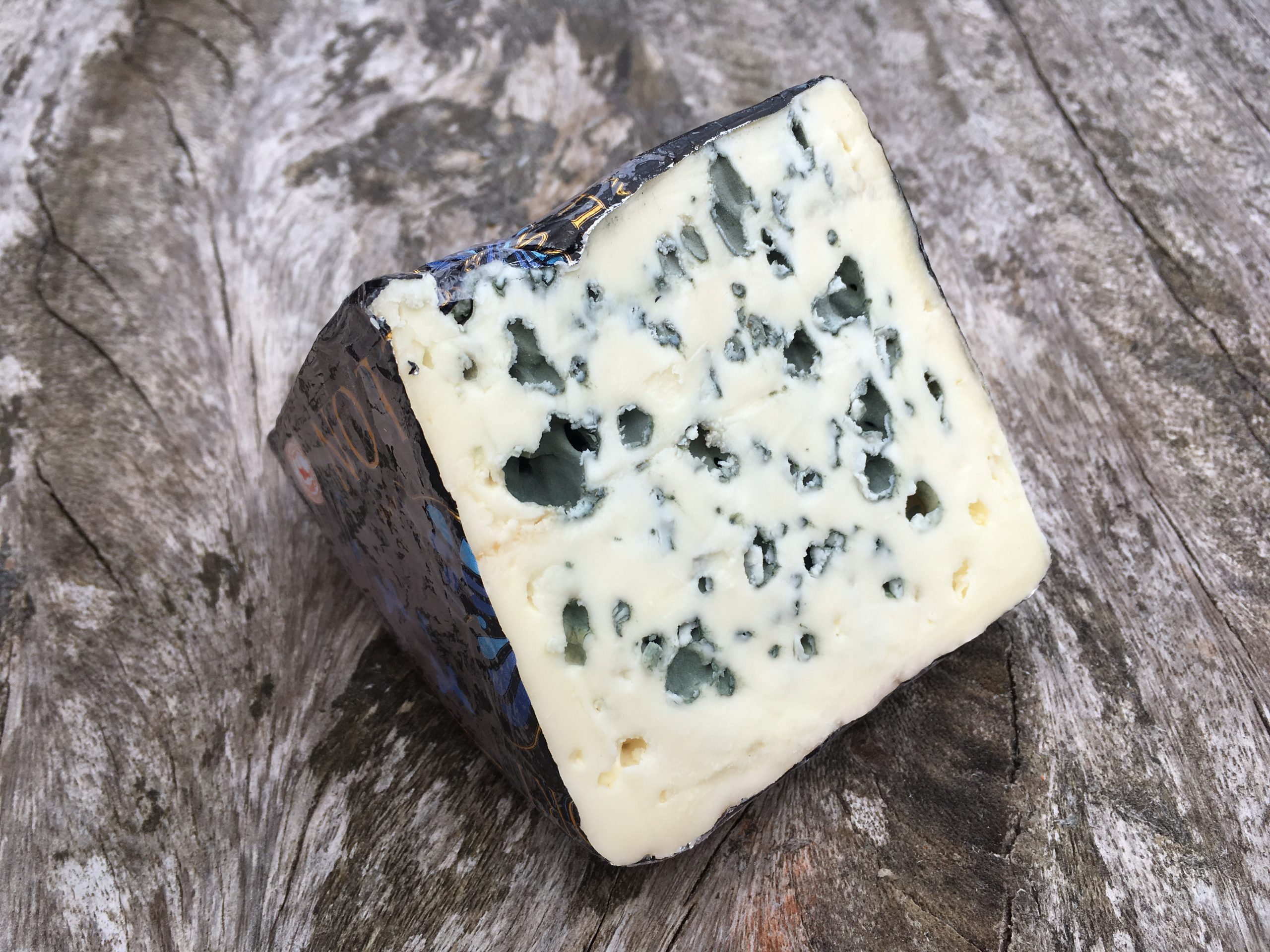
Fromagerie Papillon is a name that pops up again and again in Roquefort’s story. They’ve been making it since 1906, and they’re known for being picky about which wheels get the Black Label. Only the best make the cut, and they’re wrapped in black foil and aged a bit longer for extra depth. One thing I love: Papillon grows its own Penicillium roqueforti mould on bread they bake themselves, sticking to old-school methods. It’s this kind of attention to detail that makes their Roquefort stand out.
Roquefort Papillon PDO – Jen’s Tasting Notes
Tasting Papillon Roquefort is a real treat. The cheese is a pale ivory colour, shot through with bright green-blue veins. It’s both crumbly and creamy, and if you let it come to room temperature, it almost melts on your tongue. The smell is bold and earthy, with that unmistakable sheep’s milk tang. Flavour-wise, it starts off rich, then you get a salty kick, and after that, all sorts of things come through. I pick up complex notes of toasted nuts, damp stone, and a subtle sweetness that lingers beneath the blue intensity. The finish is long and savoury, with a lovely mineral note from the caves.
How to Serve and Pair Roquefort Papillon
- Make sure you take it out of the fridge a good hour before you want to eat it so it can come up to room temperature.
- Classic pairings: Tradition dictates a glass of Sauternes, the honeyed sweetness of the wine offsetting the salt and spice of the Roquefort in perfect contrast.
- Something a little different: A crisp Sauvignon Blanc also complements the cheese’s richness.
- On the plate: Let the cheese be the star by serving it with a slice of rustic baguette, fresh figs and a few walnuts to add a different texture in the mouth
- In the kitchen: Roquefort Papillon isn’t just for the cheeseboard either; it’s brilliant crumbled into salads, melted into sauces, or even on top of a steak.
Jen’s note: No-one really knows how Fromagerie Papillon got its name but I like to think that the journey from plain sheep’s milk to a rich, tangy Roquefort is like a caterpillar turning into a butterfly. So, Papillon brings to mind transformation, growth, and all the magic that happens as cheese matures.
Buying Roquefort Papillon PDO
- Brand or Producer: Fromagerie Papillon
- Product name: Roquefort PDO
- Milk: Sheep
- Country: France
- Region: Roquefort-sur-Soulzon
- Strength: Strong
- Vegetarian: No
- Suitable for pregnancy: No
- Allergens: MILK
Sizes and Prices
- 100g wedge, £5.20
- 500g wedge, £26.00
- Half wheel (approx. 1.35kg), available to pre-order
Storage Advice
- Keep refrigerated
- Wrap in waxed paper or cling film
- Remove from the fridge before serving
- Consume within 10 to 14 days of opening
Delivery and Collection
- UK wide courier delivery
- Click and collect from our Pangbourne shop
- Free local delivery available for selected postcodes
Ingredients (Allergens are listed in capitals)
MILK, starter cultures, rennet, salt, Penicillum Roqueforti