Description
Sinodun Hill Cheese
About Sinodun Hill
If you haven’t tried Norton & Yarrow Cheese’s Sinodun Hill yet, you’re in for something special. This soft, pyramid-shaped goat’s cheese is a real highlight of modern British cheesemaking, mixing old-school methods with a lovely local twist. It’s creamy, elegant, and packed with flavour. No surprise it’s become a favourite on cheeseboards all over the country and even beyond.
At this point I have to admit that Sinodun Hill is one of my all-time favourite cheeses so I am somewhat biased with these notes!
From Oxfordshire to Carmarthenshire
Sinodun Hill is made by Fraser Norton and Rachel Yarrow. The pair began cheesemaking in 2014 having been inspired by an article they read about cheese whilst on holiday. It was a complete career change for them both, but it has proved to be a successful one. Neither of them started out as farmers. Rachel was an English teacher (weirdly, she taught our son at school), and Fraser worked in project management (also weirdly, Fraser worked with Ali before cheese came into all our lives). They decided to give cheesemaking a go and build a life around good food.
By 2015, Fraser and Rachel had become tenant farmers at Earth Trust Farm in Oxfordshire, a brilliant scheme that helps new farmers get started without the massive cost of buying land. The name Sinodun Hill is a nod to the Sinodun Hills, also known as the Wittenham Clumps, in Oxfordshire. These chalky hills look out over the rolling hills of the Earth Trust Farm. It’s a lovely way to tie the cheese to the landscape where it all began.
After nearly ten years at Earth Trust, Fraser and Rachel made a big move in January 2025. They packed up their goats as well as all of the dairy buildings and set off for their very own farm near Llangadog in Carmarthenshire, Wales. This was more than just a change of scenery; it was a return to family roots, as Rachel’s family had farmed in the area back in the 1970s.
A Taste of Wales
Sinodun Hill is made with milk from Fraser and Rachel’s own herd of Anglo-Nubian goats. These are the very cute goats with the long floppy ears. The breed is known for its luscious, creamy milk, and it is brilliant for cheesemaking. You can really taste the quality of milk in the cheese. Everything Fraser and Rachel do is small-scale, using traditional, slow methods, which make their cheeses excel.
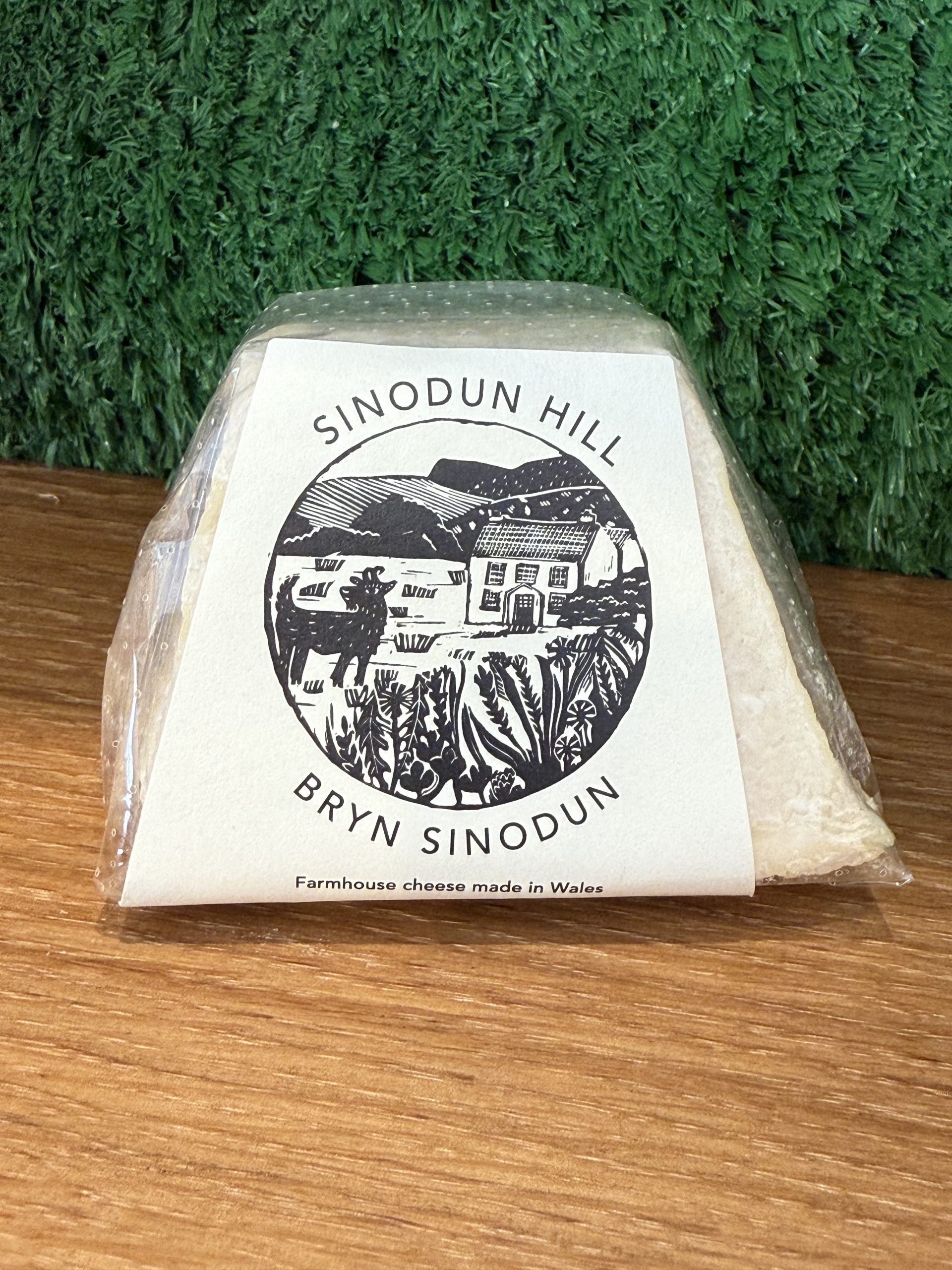
Even though it’s now made in Wales, Sinodun Hill still keeps its Oxfordshire roots in its name. In its new home, it’s called Bryn Sinodun; ‘bryn’ means hill in Welsh. It links its past and present and is a fitting tribute to both.
Sinodun Hill – Jen’s Tasting Notes
Sinodun Hill looks great on a cheeseboard. It’s a little pyramid with a wrinkly, lightly mottled rind. Inside, it’s creamy, airy, and mousse-like, never dense or chalky.
A young Sinodun Hill gives you a lovely burst of fresh citrus and gentle, yoghurt-like tang, with clean, grassy notes from the goat’s milk. The rind sometimes adds a hint of red fruit or earthiness, which makes it much more interesting than your average goat’s cheese.
Let it age for another week or two, and the texture softens even more, with deeper flavours coming through. You might taste almond, gentle nuttiness, and sometimes a faint hint of mushroom or that lovely farmyard note from the rind. The citrus notes calm down, leaving a more rounded, savoury richness.
How to Serve and Pair Sinodun Hill
- Make sure you take it out of the fridge a good hour before you want to eat it so it can come up to room temperature.
- Classic pairings: Try it with a dry Champagne if you’re in the mood to celebrate. It cuts through the creaminess of the cheese and picks up on the citrus notes.
- Something a little different: A fresh pale ale or a dry cider is also a great match. They bring out the tang and creaminess without taking over.
- On the plate: Fresh pears, green grapes, a bit of quince paste, or a drizzle of wildflower honey all add a lovely sweetness that balances the cheese’s acidity.
- In the kitchen: This cheese is really at its best when on a cheeseboard but if you have a bit in the fridge that looks past its best, it is particularly tasty when melted over some roasted butternut squash!
Jen’s note: Unlike many cheeses that are named after their makers or local villages, Sinodun Hill’s name goes back even further. “Sinodun” is thought to come from an old Celtic word meaning old fort, probably referring to the ancient settlements on the hilltops above the Thames Valley, where the cheese first came to life.
Buying Sinodun Hill
- Brand or Producer: Norton & Yarrow
- Product name: Sinodun Hill
- Milk: Goat
- Country: Wales
- Region: Carmarthenshire
- Strength: Medium
- Vegetarian: Yes
- Suitable for pregnancy: No
- Allergens: MILK
Sizes and Prices
- Sold as a whole little cheese, £14.00
Storage Advice
- Keep refrigerated
- Wrap in waxed paper or cling film
- Remove from the fridge before serving
- Consume within 10 to 14 days of opening
Delivery and Collection
- UK wide courier delivery
- Click and collect from our Pangbourne shop
- Free local delivery available for selected postcodes
Ingredients (Allergens are listed in capitals)
MILK, salt, starter cultures, vegetarian rennet, ripening cultures.